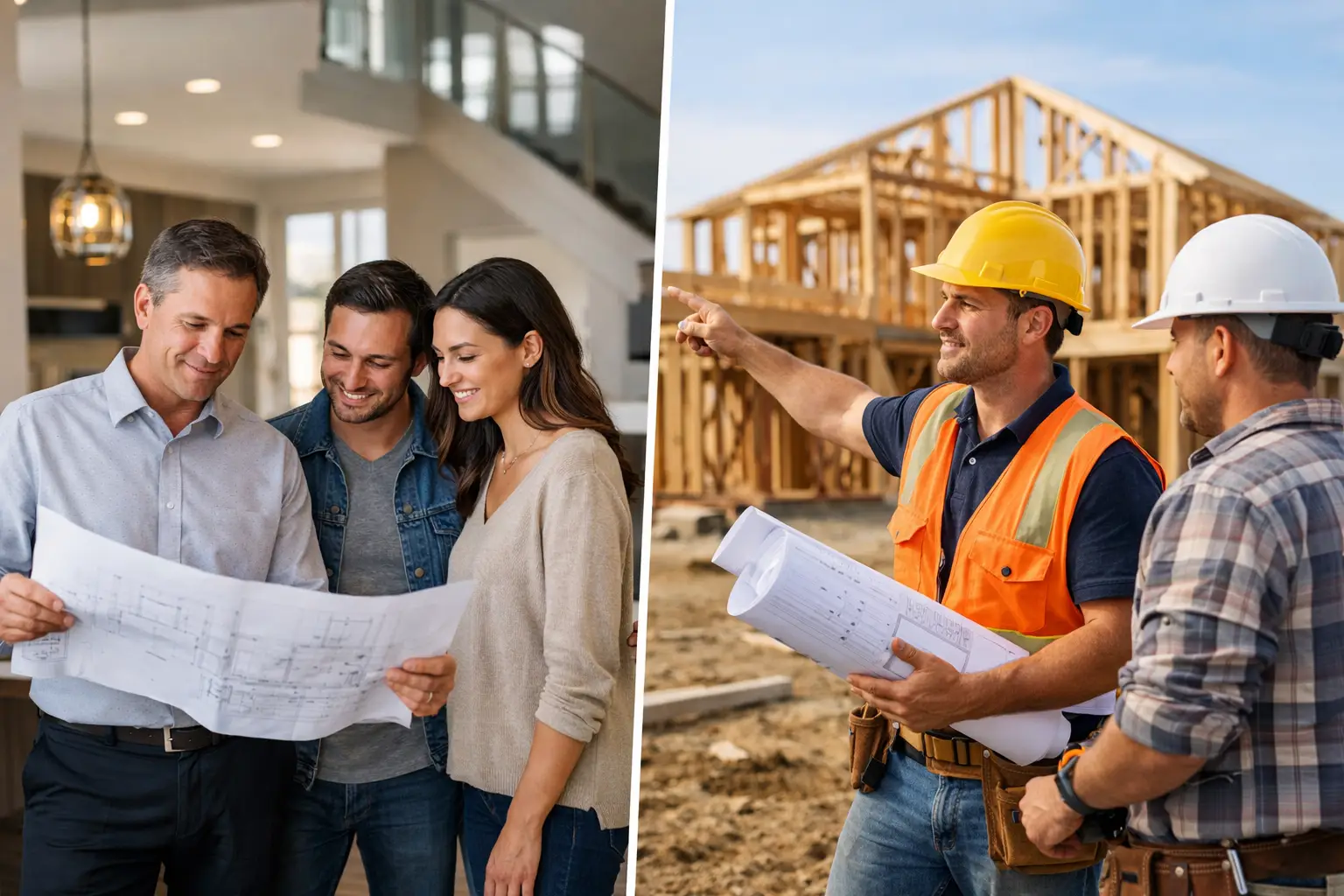
If you are planning a major residential project, the custom home builder vs general contractor question is not a small one. It affects who leads the process, how decisions get made, where risk sits, and how much coordination lands on your shoulders. For Peninsula homeowners investing serious money into a new home, large addition, or whole-house remodel, that choice can shape the entire experience as much as the finished result.
The short answer is that there is overlap, but they are not always the same thing.
A custom home builder is typically focused on ground-up homes designed around a specific client, site, and lifestyle. A general contractor is a broader construction role. That can include new construction, but also remodels, additions, kitchens, baths, ADUs, and complex structural upgrades. Some firms do only one. Some do both. The difference that matters most is not the label on the business card. It is the scope they are equipped to manage and the accountability they are willing to own.
Custom home builder vs general contractor: what changes in practice?
On paper, both may hire trades, manage schedules, pull permits, and build from plans. In practice, the distinction usually comes down to where their experience is concentrated.
A custom home builder is often organized around new-home delivery. That means lot evaluation, preconstruction input, builder-grade estimating tied to a full plan set, sequencing an entire house from foundation through finish, and coordinating a large number of decisions that affect the long-term performance of the home. If you are starting with a vacant lot or tearing down and rebuilding, that specialization can be valuable.
A general contractor, by contrast, may be built for a wider range of residential work. A strong GC can manage structural remodels, additions, occupied-home renovations, and ADUs where the biggest challenge is not only construction, but also phasing, site logistics, temporary protection, hidden conditions, and keeping a family home functional during the work. In older Peninsula housing stock, that experience matters. Opening walls in a 1950s home is a different exercise than building from scratch on a clear site.
That is why the custom home builder vs general contractor comparison should not stop at definitions. You need to look at the project in front of you. A company that excels at ground-up homes may not be the best fit for a highly invasive remodel with utility upgrades, finish matching, and months of work around an occupied residence. The reverse is also true.
The better question is who owns the full process
Homeowners often assume the builder builds and the architect designs, with everyone else falling into place. Real projects are rarely that tidy.
The best construction partners step in early. They help test feasibility, flag budget pressure before plans are overdeveloped, coordinate engineers, prepare realistic scopes, and anticipate permit comments before the city issues them. That early involvement is where cost control starts. It is also where many projects either gain clarity or begin to drift.
This is where a full-service general contractor can be the stronger choice, especially if the firm has design-build coordination experience. If your contractor is comfortable moving from planning and permits into construction and closeout, you reduce handoff friction. You also reduce the classic problem of each party blaming the other when drawings, pricing, and field conditions do not align.
For a luxury homeowner, that continuity is not just convenient. It protects the investment. One accountable team with a disciplined process usually performs better than a loose collection of specialists who meet each other after permit approval.
Cost is not just the bid number
Many homeowners compare a custom home builder and a general contractor by price alone. That is understandable, but incomplete.
The real issue is how each firm scopes the work and how transparent they are about what is excluded, still unknown, or likely to change. A low number attached to a vague scope is not savings. It is deferred cost. You usually pay for it later through change orders, schedule extension, or quality compromises.
A seasoned builder should be able to explain allowances, long-lead items, labor assumptions, and where site conditions could affect the budget. They should also tell you what level of design completion is required to price with confidence. If they cannot do that, the proposal may look polished while still leaving major risk unpriced.
This is especially relevant in high-end residential work. Premium cabinetry, custom steel, large-format stone, specialty glazing, integrated lighting, and advanced mechanical systems all carry coordination risk. The firm you hire should know how those decisions affect rough framing, electrical layout, delivery timing, and final finish quality. If they do not, the budget can unravel even when everyone is acting in good faith.
Why in-house capability changes the equation
Not all contractors manage work the same way. Some outsource nearly everything. Others keep key trades in-house and use subcontractors more selectively.
That distinction matters more than many homeowners realize. When electrical, plumbing, or roofing are handled by rotating third parties with competing priorities, schedule control gets weaker and field accountability gets blurry. If something is missed, the answer can quickly become, "that was the sub's scope," which is not much comfort when your project is on hold.
A contractor with meaningful in-house execution can often maintain tighter quality control, faster problem-solving, and more predictable sequencing. It also creates a cleaner chain of responsibility. There is one contract you can hold accountable, and one team that cannot easily pass the problem elsewhere.
For complex remodels and custom homes alike, that model tends to produce a steadier experience. It is one reason firms like Westward Construction are structured around control, honest scoping, and accountability rather than pure volume.
When a custom home builder is the right fit
If you are building a fully custom house from the ground up, a true custom home builder may be exactly what you need. The best ones understand lot constraints, grading, utility coordination, envelope performance, and the long arc of a one-off home. They can work closely with architects and interior designers while protecting buildability and cost.
This can be the right fit when the project is predominantly new construction and the builder has a strong record with homes of similar scale, detailing, and finish level. In that case, specialized experience is real value, not marketing language.
But ask direct questions. Do they manage preconstruction? How involved are they before permit? Who is actually supervising the field? How much of the work is self-performed? What happens when selections are delayed or plans conflict? A premium project deserves specific answers.
When a general contractor is the better choice
If your project includes remodeling an existing home, preserving portions of the structure, adding square footage, working through city review, or upgrading major systems in place, a general contractor may be the smarter hire.
That is because remodels and additions are less predictable than they look. Existing framing may be out of plane. Old plumbing may be improperly routed. Previous work may not meet code. Foundations may need more intervention than the plans anticipated. A contractor who has lived through those realities repeatedly will usually handle them with less drama and better communication.
This is also where process discipline matters. Weekly updates, proactive change-order conversations, clear documentation, and practical scheduling are not cosmetic touches. They are part of client protection. High-net-worth homeowners are not only buying construction labor. They are buying judgment, organization, and reduced stress.
How to choose without getting stuck on labels
The safest way to approach the custom home builder vs general contractor decision is to evaluate the company, not just the category.
Look at whether their past work matches your exact type of project. Ask how they develop scope, how early they get involved, and how they communicate when surprises arise. Review whether they have stable trade relationships or in-house crews. Ask who will be on site, who will answer questions, and how decisions are documented. If the answers are vague during the sales process, they rarely get clearer once construction starts.
You should also pay attention to how a firm talks about quality. Serious builders do not only show finish photos. They talk about waterproofing, flashing, framing tolerances, rough-in coordination, and the details behind durability. That is the difference between work that photographs well at handoff and work that performs well years later.
For Peninsula projects, local experience deserves extra weight. Municipal review, neighborhood constraints, lot conditions, and inspection culture vary from city to city. A contractor who understands that terrain can often move more efficiently and anticipate issues earlier.
The right partner is usually the one who can see around corners, price honestly, and keep responsibility in one place. Whether they call themselves a custom home builder, a general contractor, or both matters less than whether they can build your project right the first time. If you are making a long-term investment in your home, choose the team whose process gives you confidence before construction even begins.