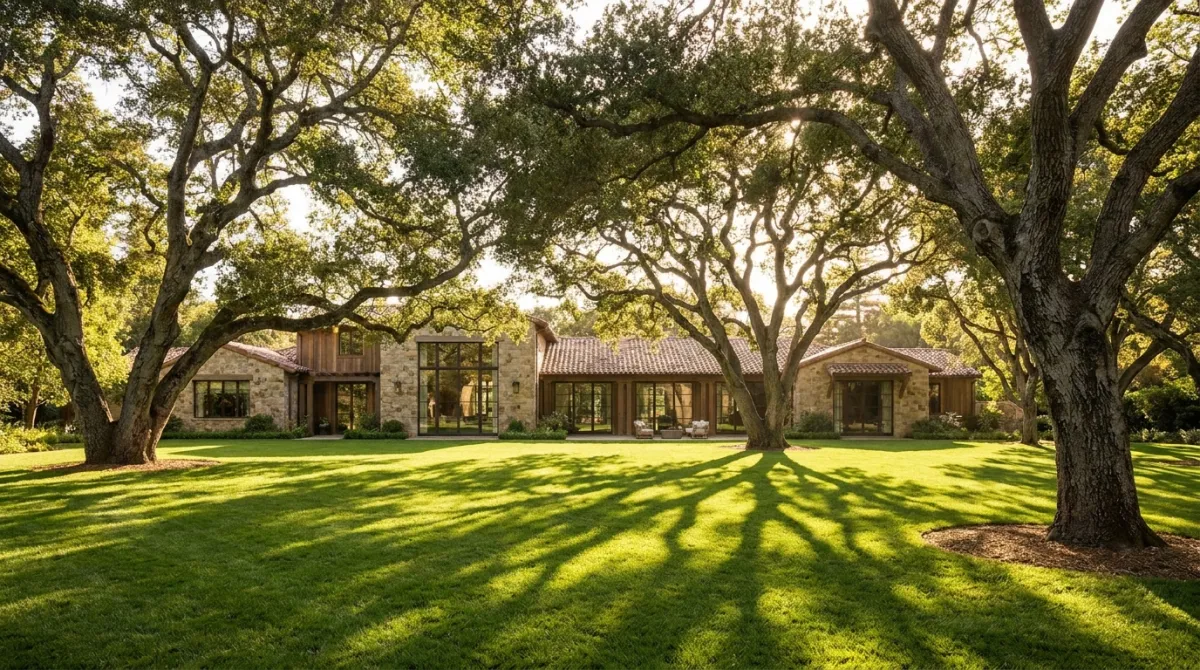
Atherton's character comes from its trees. The mature oak canopy is the reason these streets feel the way they do, and the town protects it seriously. If you are planning an addition, a pool house, or a ground-up rebuild on an Atherton lot, the oaks are not landscaping. They are a design constraint you plan around from day one.
We have learned to start projects here by walking the property with the trees in mind before we think about the floor plan. Here is why.
What the 48-inch rule actually protects
Atherton protects heritage trees, and for oaks the threshold is a circumference of about 48 inches measured roughly 54 inches above the ground. Once a tree is protected, it carries a Tree Protection Zone around it that limits what you can do nearby: excavation, grading, trenching, and where structures can sit.
A common way to size that zone is to take the trunk's diameter and multiply by a generous factor to get a protected radius around the trunk. The exact formula and measurements should always be confirmed with the town and a certified arborist, because the numbers and the review process change. The point to internalize is simple: a large oak can quietly remove a chunk of your buildable area, and you want to know that before you design, not after.
Design around the canopy, not through it
On a big Atherton lot, position is everything. We have seen homeowners fall in love with a footprint, only to find a heritage oak's protection zone sitting right where they wanted the new wing. The better path is to map the protected trees and their zones first, then shape the addition or the new structure to live comfortably outside them.
This is where experience with the town pays for itself. Knowing how the review reads a site plan, and how to show the protection measures clearly, keeps a project moving instead of stalling on tree questions. It also tends to produce better houses, because the design is responding to the land rather than ignoring it.
If you are running the project yourself
The most expensive mistakes we see from owner-builders here are not design mistakes, they are job-site mistakes. Parking heavy equipment over an oak's root zone, staging materials on it, or grading soil against the trunk can compress and damage the roots slowly and permanently. Atherton's code treats unauthorized tree impacts seriously, with real penalties and replacement requirements, and the fines for harming a mature heritage oak are not small.
If you are managing your own build, get the root-protection zones calculated by an arborist, fence them before anything heavy arrives, and understand the monitoring and reporting the town expects during construction. Protecting the tree is not a formality. It is part of the budget and the schedule.
The trees are an asset, treat them like one
The instinct is to see heritage rules as a hurdle. We see them differently. Those oaks are a large part of why an Atherton property is worth what it is worth, and a home designed to sit gracefully among them is more valuable, not less. A pool cabana tucked beside a protected oak, with the canopy left intact, is a better outcome than one that required removing the tree even if removal were allowed.
If you are planning a project on an oak-heavy Atherton lot, whether a remodel or addition or a new build, we are glad to walk the property with you and talk through what the trees will and will not allow. You can also see how we approach high-end work on our portfolio.