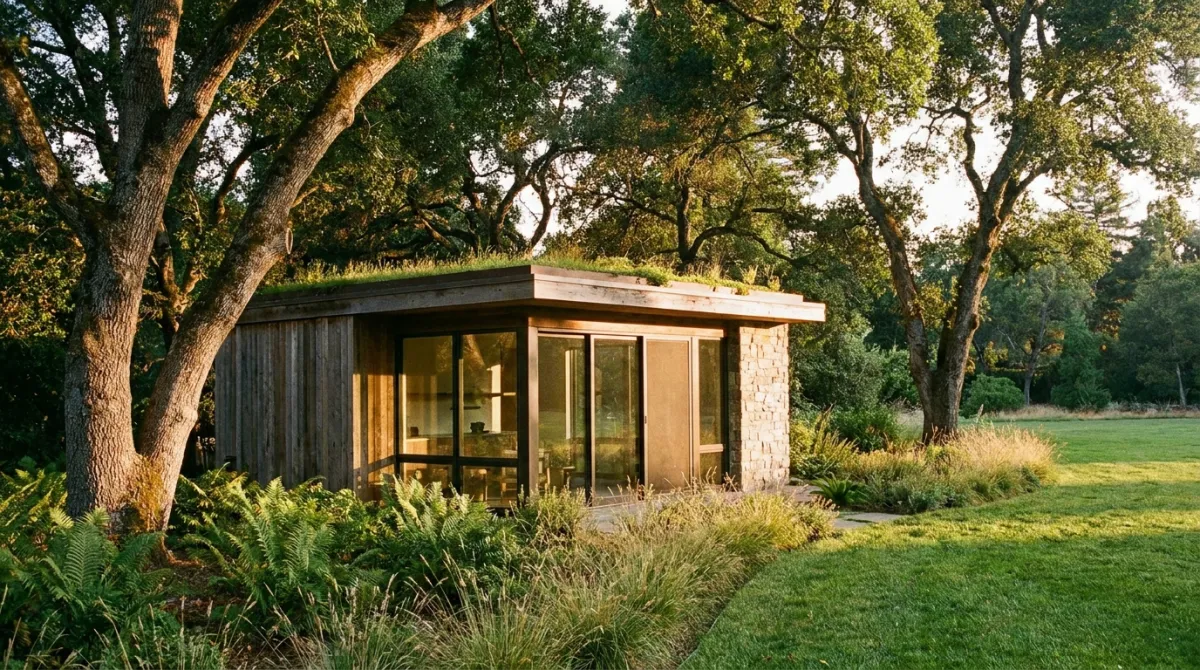
On an Atherton lot, the instinct is to build the biggest ADU the rules allow. The town permits a detached unit well above a thousand square feet, so owners aim for the ceiling. The problem is that size and setbacks are linked, and the bigger unit often costs you the part of the property you actually wanted to protect: the open yard and the privacy of the main house.
This is worth understanding whether you are hiring it out or building it yourself. If you are bringing in a builder, it tells you why the first conversation should be about placement, not square footage. If you are doing it yourself, it is the difference between a guest house that sits gracefully at the edge of the lot and one that lands in the middle of the lawn.
One note before the numbers. Atherton applies its own zoning on top of state ADU law, and both change. Treat the figures here as the shape of the rule, not the rule itself, and confirm the current thresholds with the town for your specific parcel. We get them in writing before we place anything.
Where the line sits, and why it matters
Atherton allows a detached ADU up to roughly twelve hundred square feet. But a unit above about eight hundred square feet is generally held to the full estate setbacks: a deep front setback and substantial side and rear setbacks. At or under about eight hundred square feet, state ADU law generally grants relaxed setbacks, often in the range of four feet from the side and rear lines, and that allowance can override local lot-coverage and floor-area limits.
That gap changes everything about where the building can go. A smaller unit can sit close to a side or rear property line, tucked against existing landscaping. The same program at a larger size gets pushed in toward the center of the lot to satisfy the estate setbacks, and the center of the lot is usually the yard you were trying to keep.
Why smaller can live larger
It sounds backward, but on a big Atherton parcel a well-placed eight-hundred-square-foot unit often functions better than a twelve-hundred-square-foot one. Pushed to the edge, it leaves the lawn intact and keeps a real buffer between the guest space and the main residence. Forced to the middle, the larger unit eats the open space and puts windows where you did not want them. The square footage you gained inside, you lost outside, and outside is most of why people value an Atherton lot.
None of this means smaller is always right. It means the size decision and the placement decision are the same decision, and they should be made together, on the site, before anyone falls in love with a floor plan.
The trap that catches owner-builders
The common mistake is to design to the maximum size first. You draw the unit you want, you confirm it is under the town's overall size cap, and only later do you check the setbacks for that size. By then the larger setbacks have pushed the building somewhere you never intended, or shrunk the buildable footprint so much that the plan no longer works. Now you are redesigning, and you have lost the placement that made the project worth doing.
The better order is to settle placement and the setback regime first. Decide where the unit should sit to protect the yard and the main house, see which size threshold that placement allows, and design the rooms inside that envelope. This is the part of our process we slow down for on an Atherton parcel, and you can see how it reads in finished work on our portfolio.
If you are weighing a detached ADU in Atherton and want to know which size and placement actually protect your lot, we are glad to walk the property and talk it through before any drawings begin.