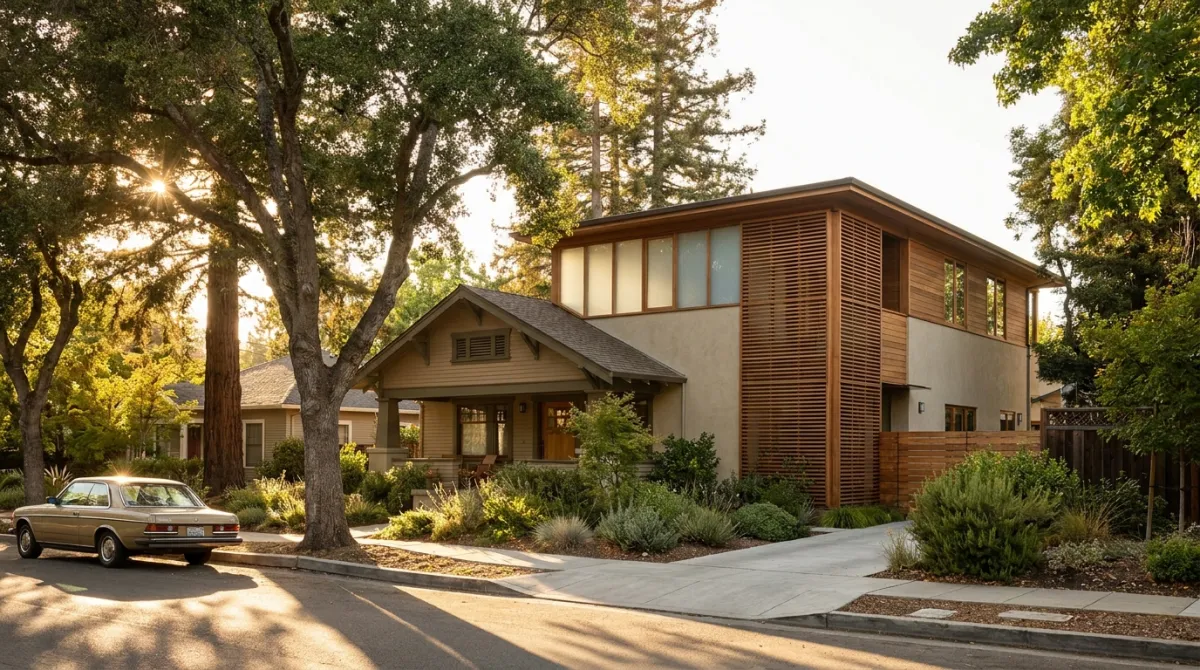
Adding a second story in Palo Alto feels like a math problem. Stay under the height limit, hold the setbacks, keep within the allowed floor area. Owners assume that if the numbers work, the addition is approved. Then they meet Individual Review, and learn that the numbers are the easy part. The review weighs how the addition feels to the street and to the neighbors, and some of that is judgment, not arithmetic.
This is worth understanding from either chair. If you are hiring a builder or designer, it is why the design and the neighbor relationships matter as much as the engineering. If you are running it yourself, it is the reason a technically compliant project can still come back for changes after the first submission.
The criteria and the process change over time. Treat the description below as how the review tends to work, and confirm the current Individual Review standards with the city for your project. We design to the review, not just to the setback table.
What Individual Review actually weighs
A second-story addition or a significant exterior change in Palo Alto generally triggers Individual Review. The review looks past the raw dimensions at scale and massing, privacy impacts on adjacent homes, the daylight plane, and how the addition sits within its neighborhood context. These are real criteria, but several of them are partly subjective. Two designs that both satisfy the height and setback rules can land very differently on massing and privacy.
That is the shift owners miss. Setbacks and height are pass or fail. Massing, privacy, and context are matters of degree, and the review has room to ask for changes even when the hard numbers check out.
The neighbors are part of the process
Individual Review usually comes with neighbor notification, which means the people next door can see the plans and respond. A well-considered design that respects privacy and keeps its bulk in proportion tends to draw little objection. A design that puts a new window looking straight into a neighbor's yard, or that looms over the property line, can draw feedback that slows or reshapes the project.
This is why outreach matters. Walking the plans to the affected neighbors before submission, and adjusting the things that would obviously bother them, turns potential opposition into quiet approval. It is far cheaper to move a window in the drawing than to defend it in review.
The owner-builder trap
The specific mistake is treating approval as a checklist. The owner confirms the addition meets setbacks and height, submits, and expects a green light. Then the review raises massing or privacy concerns, and the project goes back for revisions. Each round adds time, and a design that ignored the softer criteria can take several rounds.
The way through is to design for the review from the start. Break up the massing so the second story does not read as a box dropped on the house. Place windows for light without staring into a neighbor's space. Step the form to respect the daylight plane. Do the neighbor outreach early. The goal is to pass on the first submission, which is almost always faster and cheaper than fixing objections later.
That front-loaded care is the part of our process that protects the schedule on a Palo Alto addition. The same instinct that makes an addition feel like it belonged to the house all along is what carries it through review. You can see how that reads in built work on our portfolio.
If you are planning a second story in Palo Alto and want it designed to clear Individual Review the first time, we are glad to walk the property and plan the approach before drawings begin.