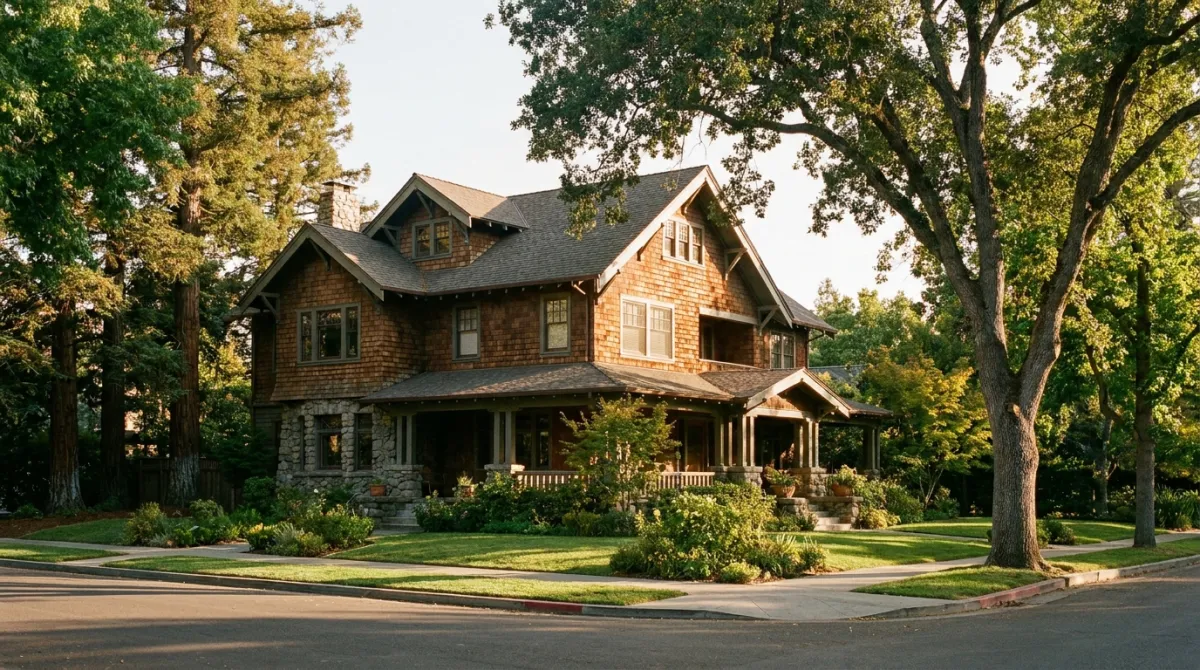
The historic neighborhoods of Palo Alto, Old Palo Alto and Crescent Park among them, hold some of the best architecture on the Peninsula. They also hold some of the oldest systems. Behind the original plaster and millwork, the wiring, plumbing, heating, and insulation are often decades past their prime. Bringing them up to modern standards is the easy part to want and the hard part to do, because the rules that protect the house also limit how you touch it.
This matters whether you are hiring a builder or running the work yourself. If you are hiring, this is why a historic remodel is not priced like a standard one. If you are doing it yourself, this is the project where the wrong off-the-shelf material can turn into an enforcement letter and a costly reversal.
One caution up front. Preservation programs and their guidelines change, and they are interpreted case by case. Treat the points below as the shape of the challenge, and confirm the current requirements with the city for your specific home. We establish what is protected before we plan what to change.
The two standards you are building to at once
A historic Palo Alto remodel answers to the building code like any project, and also to the city's historic preservation program, which tends to follow the Secretary of the Interior's Standards for the treatment of historic properties. In plain terms, that means you can modernize what is hidden, but you have to preserve what defines the house. The character-defining features, the windows, the trim profiles, the rooflines, the original materials, are the ones the rules care most about.
So the work splits in two. Behind the walls, you are running modern mechanical, electrical, plumbing, and insulation. At the visible surfaces, you are protecting or faithfully matching what was already there. Doing both at once, in the same wall, is the craft of this kind of project.
The trap hiding in a hardware-store window
Here is where owner-builders get caught. A standard modern window, a roll of contemporary insulation, or a stock trim profile looks like a simple upgrade. On a historic home, any one of them can violate the design guidelines. The result is not just a note to fix later. It can mean removing finished work and redoing it with compliant materials, which is among the most expensive ways to learn what was protected.
The features that trigger this are not always obvious. A window's muntin pattern, the depth of a casing, the texture of a stucco, the profile of a rafter tail: these read as details, but to the preservation program they are the building. Identifying them before work starts, and sourcing historically accurate materials to match, is what keeps a project out of trouble.
Where the craft actually lives
The satisfying part of this work is making a hundred-year-old house perform like a new one without looking like you touched it. Modern systems tucked behind original plaster. New comfort and efficiency hidden inside preserved walls. It takes more planning and more careful trades than a conventional remodel, because every modern improvement has to find a path that does not disturb a protected surface.
That planning is the part of our process we front-load on a historic home: identify the character-defining features, map what is hidden versus what is protected, and source the right materials before any demolition begins. The same care that makes a sensitive remodel succeed is what keeps a historic one compliant. You can see how it comes together on our portfolio.
If you own a historic home in Palo Alto and want to modernize it without crossing the preservation rules, we are glad to walk the house and map what can change and what must stay before any plans are drawn.