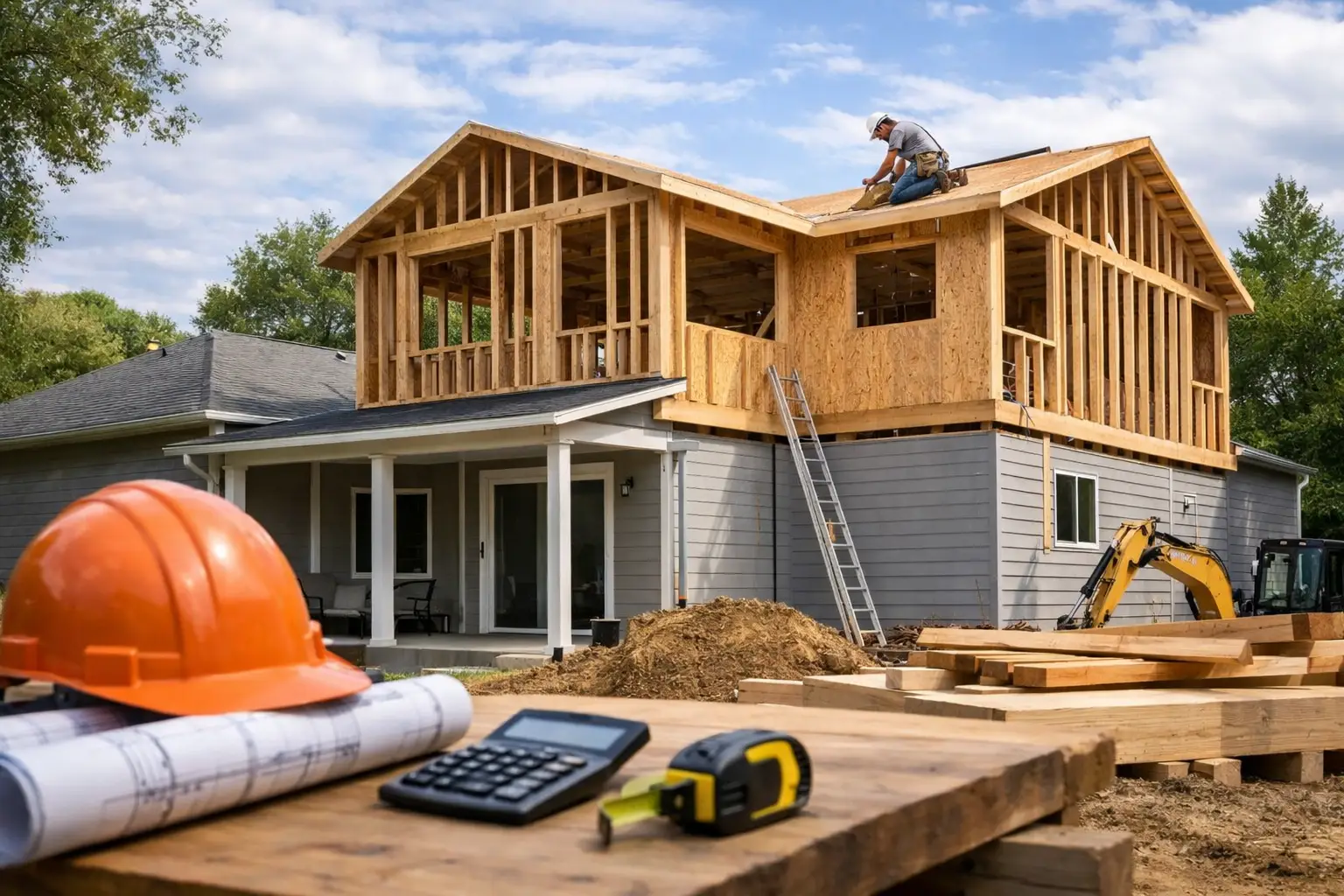
If you're weighing a second story addition cost against moving, you're already asking the right question. On the Peninsula, the answer is rarely a simple price per square foot. A second-floor addition changes the structure, the flow, the exterior, and often the way the entire house performs. That makes it one of the most valuable ways to gain space, but also one of the most complex.
For many homeowners in Hillsborough, Palo Alto, Menlo Park, Los Altos, Burlingame, and nearby communities, the real decision is not just whether the numbers work. It is whether the project can be planned and executed in a way that protects the home, preserves schedule control, and avoids the kind of scope gaps that turn a major addition into a drawn-out problem.
What drives second story addition cost
A second story addition cost is shaped by far more than added square footage. The biggest variables usually sit below the new floor, not above it.
The first is structural capacity. Many existing single-story homes were not designed to carry a full second level. Before anyone can give a serious budget, the team needs to understand the foundation, wall framing, roof structure, load paths, and whether key portions of the first floor need reinforcement. In some homes, the structure can be upgraded efficiently. In others, the work is extensive enough that the lower level is partially rebuilt while the upper floor is added.
The second variable is how integrated the project will be. Some additions are essentially stacked over a portion of the home with minimal first-floor reconfiguration. Others involve a full-house transformation with a new stair, remodeled kitchen, upgraded mechanical systems, new windows, exterior refinishing, and a more cohesive architectural redesign. Both are called second story additions, but the cost profile is very different.
The third is finish level. A basic bedroom-and-bath expansion does not price like a primary suite with custom millwork, large-format stone, premium windows, and high-end lighting. On the Peninsula, where many homeowners expect the addition to match or elevate the existing home, finish expectations can move the budget quickly.
Typical price range for a second story addition cost
In high-cost markets like San Mateo and Santa Clara Counties, a second story addition cost often starts around the high hundreds per square foot and can move well beyond that depending on complexity, finish level, access, and first-floor scope. For a premium, fully integrated project, homeowners should be prepared for numbers that reflect both structural work and the level of finish expected in the surrounding market.
A smaller upper-level addition with modest rework downstairs may land very differently than a large addition paired with a full exterior refresh and major interior remodeling. That is why broad internet averages tend to mislead. National pricing does not account for Peninsula labor rates, permit conditions, engineering requirements, site constraints, or the design expectations of neighborhoods where the addition needs to feel original to the house.
If you are budgeting early, it is more useful to think in tiers. A simpler addition with disciplined selections and limited first-floor disruption is one category. A design-forward whole-home repositioning is another. Both can be smart investments, but they should not be compared as if they are the same job.
Why second story additions cost more than many homeowners expect
The reason is not mystery or markup. It is scope.
To build upward, a contractor often has to remove the roof, protect the structure from weather, reinforce framing, upgrade shear walls, coordinate mechanical rerouting, and create a new stair that fits both code and everyday living. During construction, sequencing becomes critical. If the planning is loose or trades are not coordinated tightly, delays and rework follow fast.
This is also where accountability matters. Complex additions are vulnerable to budget drift when the original scope is vague, when engineering and field conditions are not aligned, or when too many moving parts are handed off between disconnected parties. A homeowner may think they are buying extra bedrooms upstairs, then discover they are also buying a service upgrade, HVAC redesign, drainage work, window replacement, insulation upgrades, and finish corrections downstairs because the house has to function as one complete system.
That does not mean the project is not worth it. It means the budget should reflect the real build, not a stripped-down estimate that leaves out the hard parts.
The structural questions that affect price first
Foundation and framing
If the foundation needs underpinning or significant reinforcement, the cost changes early. The same goes for first-floor walls that need new beams, posts, or shear assemblies. These are not cosmetic line items. They are the work that allows the addition to be built right the first time.
Roof removal and weather protection
A second story addition begins with major demolition and temporary protection. On occupied homes, weatherproofing and site safety are non-negotiable. The process has to keep the house secure while allowing the new level to move forward efficiently.
Stairs and circulation
The staircase is often underestimated. It takes meaningful square footage from the first floor, affects hallways and room layouts, and can trigger broader redesign decisions. A well-placed stair improves the home. A compromised one feels like an afterthought forever.
Permits, design, and city review are part of the cost
On the Peninsula, city approvals can significantly influence both timing and budget. Planning review, structural engineering, Title 24 compliance, geotechnical input in some cases, and detailed permit documentation are all part of a serious second-story project.
In neighborhoods with design review or stricter zoning scrutiny, massing, setbacks, privacy concerns, and height limits can shape the design before construction even starts. That is why early feasibility matters. A clean concept on paper still needs to survive local review, site realities, and construction logic.
Design fees, engineering, permit costs, and preconstruction coordination should be treated as real project costs, not side notes. They reduce risk when done thoroughly. They increase risk when rushed.
Living in the home during construction
Some homeowners assume they can remain in place throughout the build. Sometimes that is possible for a portion of the project. Sometimes it creates more disruption than it is worth.
A second story addition often affects power, plumbing, HVAC, roofing, and weather protection. Noise is constant. Dust control can be managed, but not erased. Access to parts of the home may shift as framing and stair work move forward. If the first floor is also being remodeled, temporary relocation may be the cleaner decision.
That choice affects budget too. The direct construction cost is only one piece. Carrying costs, alternate housing, and the practical cost of living through a major structural project should be part of the planning conversation from the beginning.
Where budgets often expand mid-project
The most common budget increases are not random. They usually come from predictable gaps in early planning.
One is underestimating the amount of first-floor work needed to make the second floor feel intentional. Another is assuming older systems can stay untouched when the house is already open. Electrical panels, plumbing lines, ductwork, insulation, and windows often come under review once walls and ceilings are exposed.
Selections are another pressure point. Homeowners may begin with a midrange allowance and later choose finishes that better suit the value of the home. That is a reasonable decision, but it should be made with clear pricing and proactive communication, not after the schedule is already committed.
This is where a disciplined contractor earns trust. Honest scope, clear allowances, and fast change-order communication protect both the budget and the relationship.
How to budget for second story addition cost more intelligently
Start by defining the real objective. Is the goal to add bedrooms and baths with minimum disruption, or to reposition the entire home for the next twenty years? Both can be valid, but they lead to different design and construction strategies.
Next, budget beyond construction alone. Include design, engineering, permit fees, temporary housing if needed, utility upgrades, finish selections, and a contingency for existing-condition surprises. Older homes almost always reveal something once opened up.
Then choose a team that can price with enough detail to expose the real drivers. A vague low number is not savings. It is usually deferred scope. On a project this complex, control matters more than optimism.
For many Peninsula homeowners, the best path is a builder who can coordinate feasibility, design input, budgeting, permitting, and construction under one accountable process. Westward Construction approaches additions that way because second-story projects do not reward fragmentation. They reward planning, execution, and the discipline to keep quality and communication aligned from the first budget through final inspection.
Is a second story addition worth the cost?
Often, yes. Especially when the alternative is leaving a neighborhood you value, forcing a poor first-floor expansion onto a constrained lot, or buying a new home that still needs substantial work. A well-designed second story addition can preserve land, improve function, and raise the overall quality and value of the property.
But the right answer depends on the existing house. Some homes are strong candidates for an upper-level addition. Others are better served by a larger whole-home remodel, a rear addition, or even a rebuild when the structure and layout no longer support efficient investment.
That is why the first budget should not be treated as the finish line. It is a tool for making a clear-eyed decision about scope, value, and whether the house you have can become the house you want.
The best projects begin when the numbers and the vision finally match, and you have a team that knows how to carry both with care.