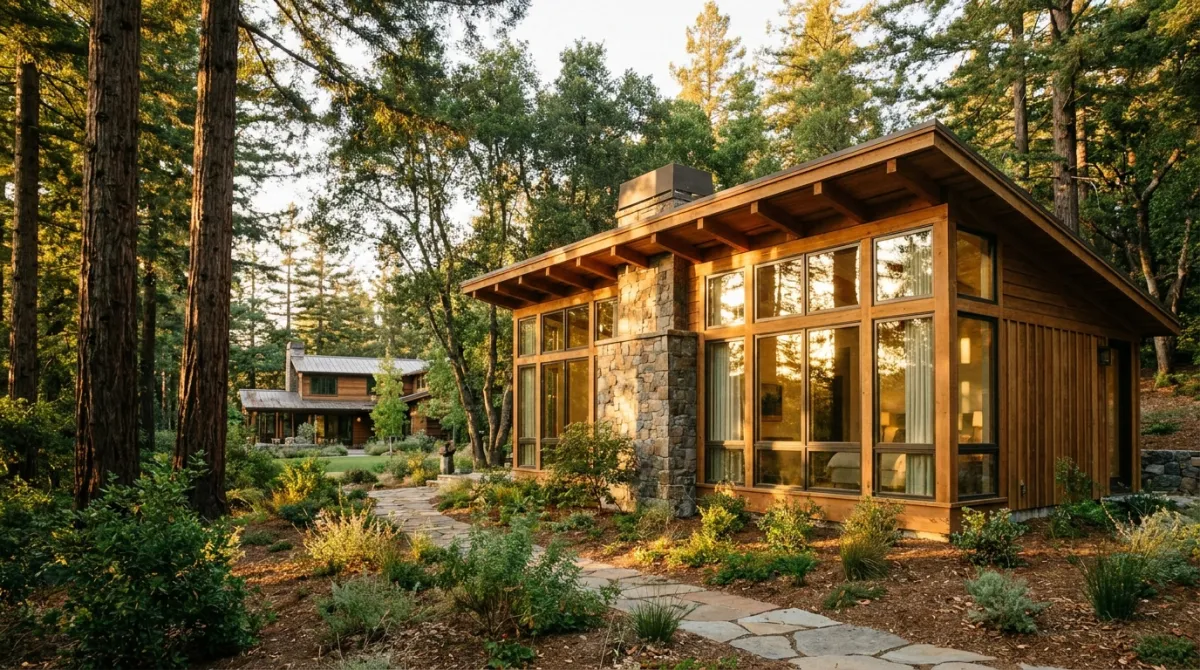
Woodside is generous about ADU size, which is part of why it draws people planning for extended family. The town allows a detached unit up to roughly fifteen hundred square feet, big enough to be a genuine second home on the property. But that generosity has a hinge in it. Past about eight hundred square feet, the unit stops being exempt from your property's broader limits and starts counting against them, and the setbacks change with it.
This is worth understanding from either side. If you are hiring a builder, it frames the size conversation around consequences, not just square footage. If you are doing it yourself, it is the threshold that determines how much the ADU constrains the rest of your property, now and later.
Thresholds and setbacks change, and zoning varies across the town. Treat the figures here as the shape of the rule, and confirm the current numbers with the town for your parcel. We map the consequences of each size before settling on one.
Where the generosity turns into a tradeoff
Up to about eight hundred square feet, a detached ADU in Woodside generally enjoys the relaxed treatment state law provides, sitting lightly against the property's overall limits. Above that, the portion over the threshold counts toward the property's total floor-area ratio, and the unit has to meet the standard primary setbacks, which can be substantial depending on the zoning of your lot.
So a fifteen-hundred-square-foot guest house is not simply a bigger version of an eight-hundred-square-foot one. It draws down your property's floor-area budget and has to sit farther from the lines. On a large wooded parcel that may be fine. On a tighter lot it can be the decision that limits everything else.
What a larger guest house gives, and what it takes
The case for the larger unit is real. Fifteen hundred square feet can support true multi-generational living: a parent, an adult child, or a long-term guest with genuine independence. For many Woodside families that flexibility is the whole point of the project, and it is worth the floor area it consumes.
The cost is future flexibility. Because the larger ADU counts against the property's total floor area, it can limit what you are later allowed to add or change on the main residence. The space you commit to the guest house is space the main house may not get back. That is not a reason to avoid the larger unit. It is a reason to decide with the whole property in mind, not just the immediate need.
The owner-builder trap
The common error is assuming all ADUs get the same exemptions, that an ADU is automatically free of local coverage and setback rules regardless of size. Units over about eight hundred square feet are not. An owner who designs a large guest house on that assumption can find it triggers standard setbacks and counts against the property in ways the plan never accounted for, forcing a redesign or a smaller main-house future than expected.
The way through is to decide the size against the whole property, not in isolation. Weigh the living space you need now against the flexibility you want to keep, see exactly where the threshold changes the setbacks and the floor-area math, and design with both in view. That long view is the part of our process we bring to a Woodside ADU. You can see how generous units can still respect their setting on our portfolio.
If you are planning a detached ADU in Woodside and want to size it with the whole property in mind, we are glad to walk the land and run the tradeoffs with you first.