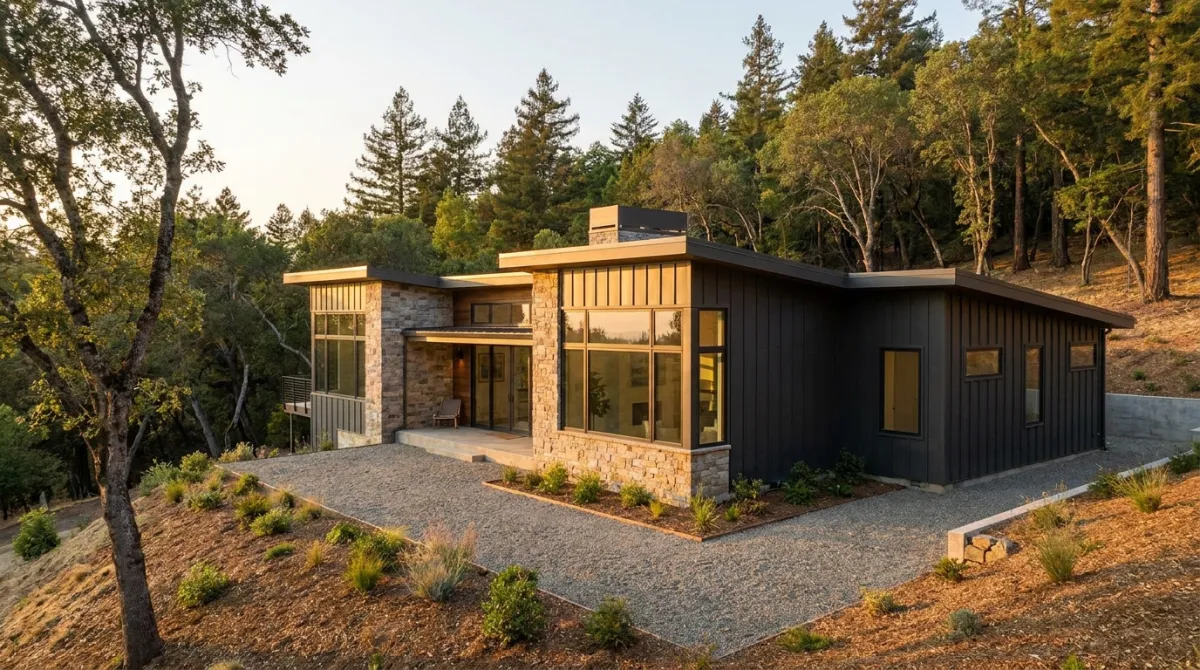
Woodside's setting is the reason people build there and the reason building there comes with rules. Much of the town sits in a designated Wildland-Urban Interface zone, where homes meet wooded, fire-prone land. Construction in that zone has to meet strict California standards meant to reduce wildfire risk. The materials often look ordinary. Whether they are certified for the interface is what decides if they pass.
This is worth knowing on either side of a project. If you are hiring a builder, it is a reason to confirm they build to interface standards as a matter of course. If you are doing it yourself, it is the difference between materials that pass inspection and a delivery of siding that gets rejected on sight.
Material standards and zone boundaries change. Treat the list below as the shape of the requirement, and confirm the current interface standards with the town and fire authority for your parcel. We specify certified assemblies before anything is ordered.
What the interface code actually asks for
The requirements target the ways a house catches fire from embers and radiant heat. In practice that tends to mean fire-resistant siding, ignition-resistant venting at the eaves so embers cannot get into the attic, dual-glazed tempered windows that resist heat, and a Class A roof, the most fire-resistant rating. Around the building, defensible space, the managed clearing of vegetation near the structure, completes the picture.
None of these are exotic. They are the same parts of a house you would build anyway, specified to a higher standard. The work is in knowing which products carry the right certification and how the assemblies go together, not in inventing anything new.
Why compliant building pays you back
Beyond passing inspection, building to interface standards protects the house when it matters and can help on a front that has become very real on the Peninsula: insurance. As carriers tighten coverage in fire-prone areas, a home built to current wildfire standards is a stronger case than one that was not. The investment in certified materials is not only a code cost. It is part of what keeps the home insurable and safer.
That is the right way to think about the requirement. It is not red tape. It is the building doing its job in the setting you chose it for.
The owner-builder trap
The specific mistake is buying standard exterior materials that are not certified for the interface. The siding, the vents, the windows look right and cost less, and then the inspector rejects them because they do not carry the wildfire rating. Now the material has to be returned and reordered, the schedule slips, and the savings evaporate. It is an easy trap, because the certified and uncertified versions can look nearly identical on the shelf.
The way around it is to specify certified assemblies from the start, confirm the ratings before purchase, and design the defensible space into the site plan rather than treating it as cleanup. Done up front, interface compliance is just good building. Done reactively, it is a series of expensive corrections.
That kind of specification discipline is part of our process, knowing the standard before the order goes in. You can see finished homes that meet their setting on our portfolio.
If you are planning to build in Woodside and want the wildfire standards handled correctly from the first material choice, we are glad to walk the property and plan it with you before anything is ordered.