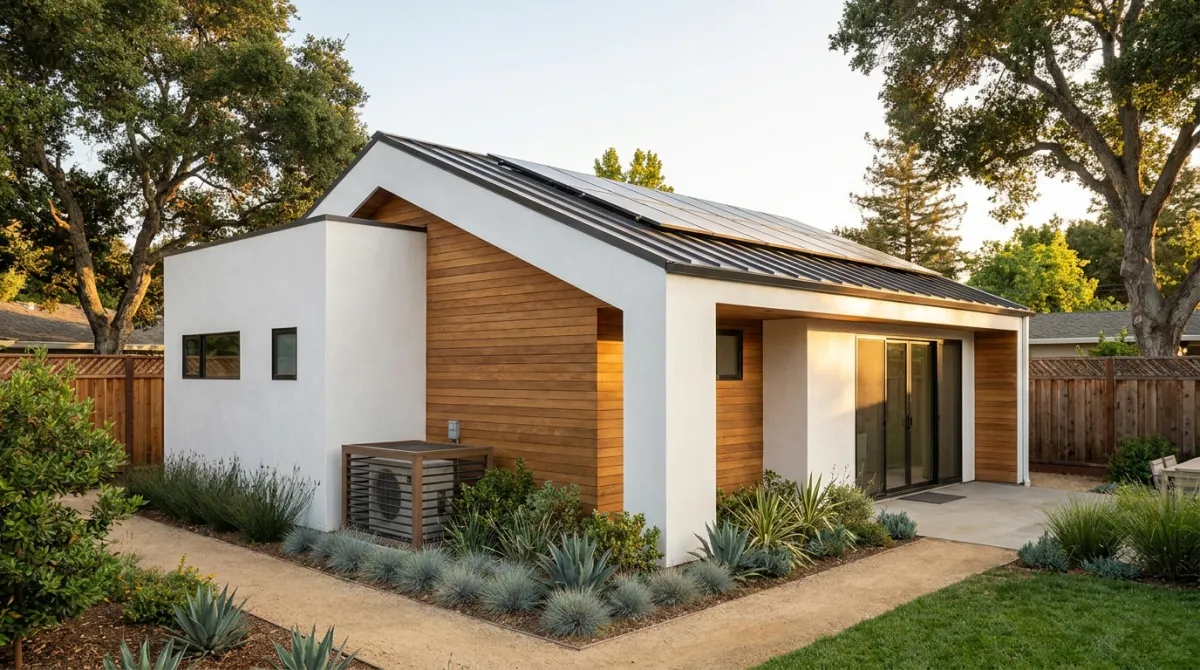
If you are planning a detached ADU in Los Altos, there is a design decision that has already been made for you: it will be all-electric. The city requires new detached accessory dwelling units to be zero-NOx emission buildings, which rules out gas for space heating, water heating, and clothes drying. Rather than treat that as a limitation, we have found it usually leads to a cleaner, more modern, more comfortable building.
Here is how to design for it well, and where owner-builders tend to stumble.
What zero-NOx actually requires
The mandate means no gas-fired appliances for heating air, heating water, or drying clothes in the new unit. In their place you design around electric systems: high-efficiency heat pumps for heating and cooling, a heat-pump water heater, and an electric or heat-pump dryer. Confirm the current requirements with the Los Altos Building Division before you design, because energy codes evolve quickly, but the direction is clear and it is not going away.
Why all-electric is a feature, not a compromise
The luxury market has been moving toward electrification, smart energy management, and quiet, even comfort for years. An all-electric ADU fits that perfectly. A modern multi-zone heat pump delivers steady heating and cooling room by room, a heat-pump water heater is efficient and out of the way, and an induction cooktop is genuinely better to cook on. You end up with a guest house that is comfortable, efficient, and aligned with where high-end homes are headed.
It also pairs naturally with solar and battery storage if you want to take the next step, since everything in the building already runs on electricity.
The wiring mistakes that fail inspection
This is where owner-builders get caught. The most common error is trying to extend the main house's gas lines to the new unit out of habit. In Los Altos that is a code violation for a new detached ADU, full stop.
The second is under-provisioning the electrical. Even where an indoor cooking exemption might apply, you generally want a dedicated high-amperage circuit run to the cooktop location so the unit is ready for full electrification, plus enough panel capacity reserved for the heat pumps, the water heater, and a future car charger. Getting the branch circuits and the panel space right at rough-in is far cheaper than discovering the shortfall at final inspection. Plan the electrical load for the whole building before you frame, not after.
Mind the rest of the envelope too
Los Altos also pays close attention to green building more broadly, including construction waste diversion on larger projects. If your ADU is part of a bigger scope, expect to track and document recycling of construction debris to hit the city's targets. It is one more reason to have a team that handles this paperwork as a matter of routine rather than scrambling at the end.
The simpler path
An all-electric ADU is not harder to live in, it is just different to build, and the difference is mostly in planning the systems and the wiring up front. Done right, you get a quiet, efficient, future-ready guest house that satisfies the city without drama.
If you are considering a detached ADU in Los Altos, we are glad to walk through the all-electric design and make sure the electrical is sized correctly from the start. Our process page shows how we plan systems before the first wall goes up.