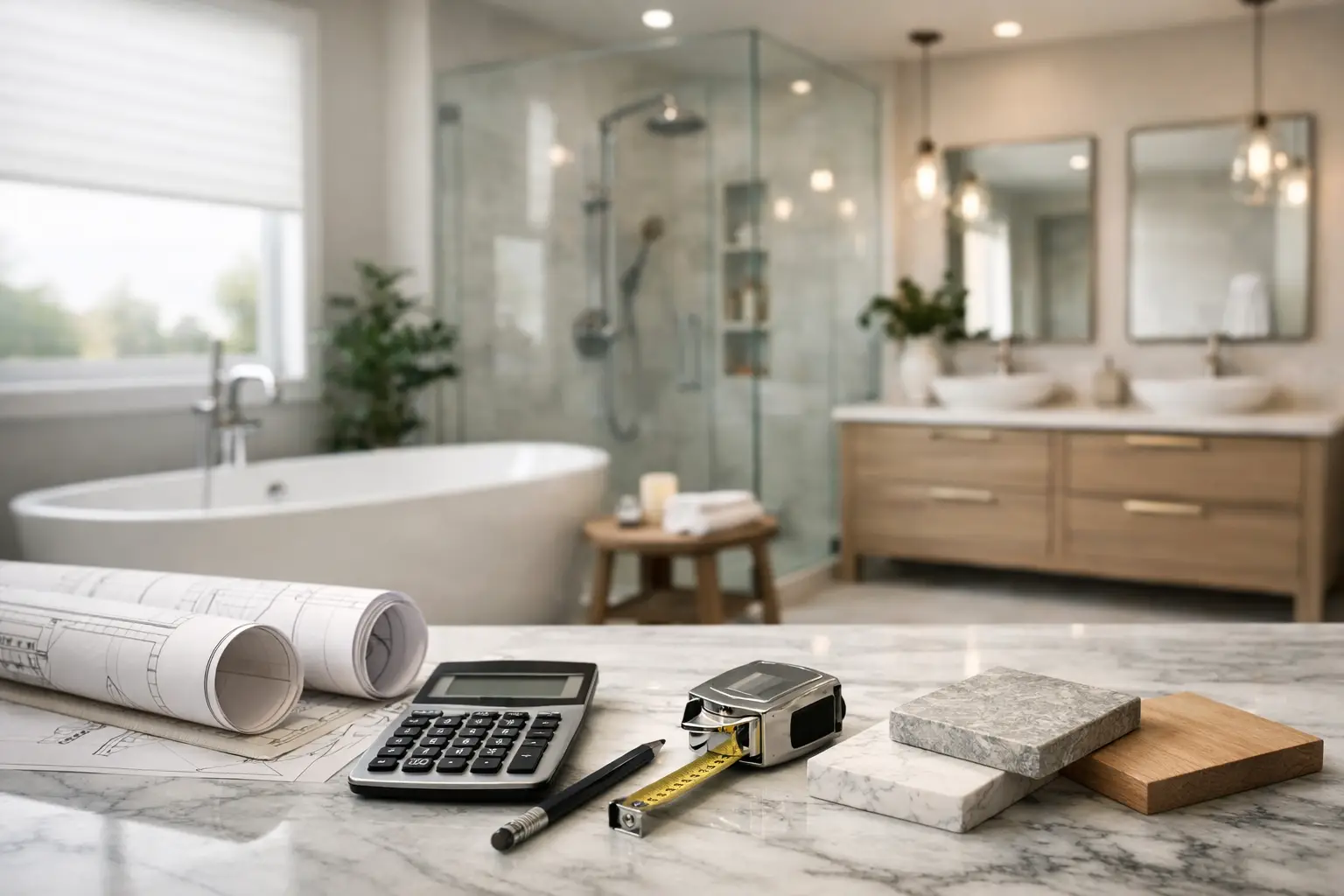
A primary bathroom remodel cost can swing dramatically based on one decision homeowners often underestimate at the start - whether they are refreshing finishes or rebuilding the room around a new layout. On the Peninsula, where expectations for design quality are high and many homes come with aging plumbing, tight framing conditions, or permit-sensitive upgrades, that distinction matters. The numbers are not just about tile and fixtures. They are about scope, coordination, and how much hidden work it takes to deliver a bathroom that feels calm, durable, and truly integrated with the rest of the home.
What drives primary bathroom remodel cost
The fastest way to misread a bathroom budget is to think in terms of square footage alone. Bathrooms are small rooms, but they are among the most trade-intensive spaces in a house. Plumbing, electrical, waterproofing, ventilation, tile setting, glass, cabinetry, and finish coordination all stack into a compact footprint. That concentration of labor is why a primary bath can cost more per square foot than many kitchens or living spaces.
The biggest cost driver is scope. If the vanity stays in place, the shower stays where it is, and the project is mostly cosmetic, the budget behaves very differently than a remodel that moves walls, relocates drains, adds a freestanding tub, or expands into an adjacent closet or bedroom. Once you start changing the bones of the room, costs rise not only because of added labor, but because coordination becomes more complex and the margin for error gets smaller.
In older homes, existing conditions also matter. A homeowner may plan for new finishes and fixtures, only to discover galvanized lines, undersized drain assemblies, outdated wiring, water damage, or framing that needs correction before new work can begin. In premium markets, the expectation is not to build over problems. It is to solve them properly so the finished bathroom performs as well as it looks.
Typical cost ranges for a primary bathroom remodel
For a straightforward primary bathroom remodel that keeps the basic layout intact and upgrades finishes, homeowners often start in the mid-five figures. On the San Francisco Peninsula, a well-executed remodel with quality materials and professional coordination typically lands higher than national averages because labor standards, permit requirements, and finish expectations are all elevated.
A mid-range primary bath remodel may involve a new vanity, stone countertops, tile flooring, a rebuilt shower, upgraded lighting, improved ventilation, and plumbing fixture replacement without major relocation. That kind of project can move into the $75,000 to $125,000 range depending on selections and hidden conditions.
A more substantial luxury remodel, especially one with custom cabinetry, slab materials, premium plumbing fixtures, heated floors, curbless shower details, integrated lighting, and layout changes, can rise well beyond that. Once structural revisions, significant plumbing relocation, or high-end specialty materials enter the picture, six figures becomes a realistic planning range rather than an outlier.
That may sound broad, but broad ranges are more honest than false precision. A bathroom is not expensive because one item is unusually costly. It becomes expensive when dozens of quality-driven decisions are made at once.
Where the money goes
The shower is often the largest single component of the room budget. A tiled shower with a custom pan, recessed niche, bench, premium valve trim, frameless glass, and careful waterproofing is labor-heavy. If you are comparing it to a basic insert or builder-grade enclosure, the difference is substantial. The reason is simple: one is built as a custom assembly that needs to last, and the other is installed as a simpler product.
Cabinetry and countertops are another major category. A furniture-style vanity, integrated storage, detailed millwork, and natural stone surfaces change both the feel and the cost of the room. Custom sizing can be especially valuable in a primary bathroom where proportions and storage matter, but custom work carries a higher price than stock options.
Tile is where design ambition can quietly expand the budget. Material cost matters, but labor often matters more. Large-format porcelain, bookmatched stone, mosaic flooring, full-height shower walls, and tight pattern alignment all take time and skill. Homeowners who want a premium look should budget not just for the tile they love, but for the installation quality that makes it read as luxury rather than expensive material poorly applied.
Plumbing and electrical work tend to be underestimated because much of it disappears behind the walls. New lighting plans, upgraded circuits, heated floors, specialty mirrors, better task lighting, and improved fan performance all add value. So do properly aligned valves, clean drain placements, and hot water delivery that matches the room's new function. These are not flashy line items, but they are the parts that make daily use feel considered.
The cost impact of layout changes
If you want the most control over primary bathroom remodel cost, start by deciding whether the current layout truly needs to change. Layout revisions can absolutely be worth it. In many homes, a cramped shower, poor vanity spacing, or awkward toilet placement limits the room's potential. Reworking the plan can create a bathroom that feels significantly larger and more functional without adding square footage.
But layout changes are where scope expands quickly. Moving drains or supply lines means more demolition, more plumbing labor, and often more inspection coordination. Shifting walls may trigger framing changes, finish repairs outside the bathroom, and updated electrical routing. If the room is on an upper floor, access and protection requirements can add another layer of complexity.
The right question is not whether layout changes cost more. They do. The right question is whether those changes solve a meaningful problem in a room you will use every day for years. When the answer is yes, they can be some of the best dollars spent in the remodel.
What homeowners often forget to budget for
The visible room is only part of the investment. Design development, permit documentation, product lead times, demolition protection, debris handling, and finish coordination all affect the final cost even though they are not always the first things a homeowner pictures.
There is also the issue of decision timing. If fixtures, tile, and cabinetry are selected late, pricing can shift and schedules can stretch. Delays create pressure. Pressure creates rushed decisions. Rushed decisions usually cost more than disciplined planning.
Contingency is another essential part of the budget, especially in older homes. Even with careful walkthroughs, no contractor can see everything before demolition. A realistic contingency protects the project from turning into a negotiation every time a hidden condition appears. For most homeowners, that financial cushion is what keeps the process steady when the unexpected shows up.
Why contractor structure affects cost
Not all remodel pricing reflects the same level of control. A lower proposal may look attractive until you compare who is actually responsible for plumbing quality, electrical scheduling, waterproofing standards, finish verification, and change-order communication. Bathrooms involve too many critical trades to be managed casually.
That is one reason experienced homeowners often place value on contractor accountability, not just headline price. When key trades are coordinated tightly, scopes are clear, and communication is direct, the budget tends to perform more predictably. Companies like Westward Construction build around that principle because a primary bath is not a commodity upgrade. It is a high-detail project where quality control and schedule discipline affect the outcome just as much as finish selections do.
How to budget realistically without overbuilding
The smartest bathroom budgets start with priorities, not products. Decide what matters most: a larger shower, better storage, a cleaner layout, improved lighting, luxury materials, or long-term durability. Once those priorities are clear, the rest of the room can be scoped around them.
This is where honest trade-offs help. You may choose porcelain that mimics stone rather than full slab walls. You may keep the toilet location fixed but invest in a more substantial vanity and better lighting. You may skip the tub if it is rarely used and put that money into a more spacious shower and warmer finishes. A good remodel is not the one with the longest allowance sheet. It is the one where the budget is aligned with how the room will actually be lived in.
For homeowners on the Peninsula, that often means thinking beyond resale clichés and focusing on execution. Buyers and appraisers notice quality, but homeowners feel it every morning. The drawer that closes properly, the shower glass that fits cleanly, the floor heat that works, the ventilation that clears the room, the tile lines that stay straight, the waterproofing you never have to think about - that is where value becomes real.
If you are planning a primary bathroom remodel, the goal is not to chase the lowest number. It is to define a scope that fits your home, your standards, and the level of craftsmanship you expect to live with for the next decade and beyond.