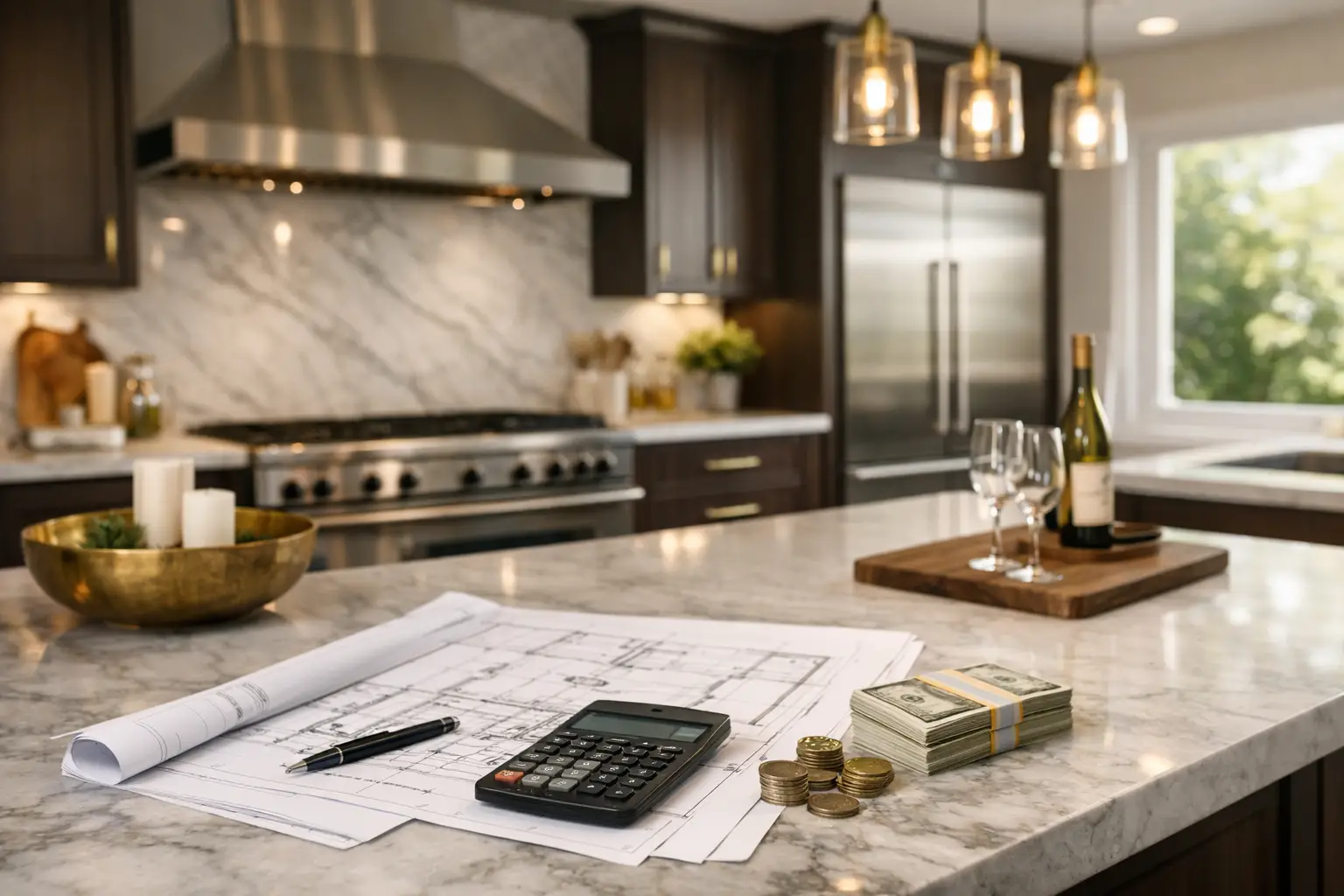
A true luxury kitchen is rarely expensive because of one dramatic choice. More often, the luxury kitchen remodel cost climbs through a series of decisions that each improve performance, appearance, and longevity - better cabinetry, cleaner layout changes, premium appliances, more refined lighting, stronger ventilation, and finishes that hold up for years instead of looking tired after two.
For homeowners on the San Francisco Peninsula, that distinction matters. In this market, a kitchen remodel is not just a cosmetic upgrade. It is a high-use, high-visibility investment inside a home where design standards, permitting requirements, and construction costs are all elevated. If you want a kitchen that feels calm, tailored, and built right the first time, the budget needs to reflect more than surfaces.
What luxury kitchen remodel cost usually includes
At the high end, a kitchen remodel is a full construction project, not a cabinet swap. The budget typically covers design coordination, demolition, framing adjustments, plumbing and electrical work, HVAC modifications if needed, insulation and drywall repair, cabinetry, countertops, tile, flooring, appliances, finish plumbing, decorative lighting, paint, permits, and project management.
That scope is why pricing can vary so widely. A luxury kitchen remodel cost may start around the low six figures for a contained remodel with premium finishes and limited structural work. It can climb well beyond that when walls move, beams are added, windows and doors change, utilities relocate, or the kitchen becomes part of a broader first-floor reconfiguration.
In premium Peninsula neighborhoods, homeowners should expect costs to reflect both the quality of the build and the complexity of the process. Labor rates are higher, inspections are more rigorous, and the standard for fit and finish is simply different from entry-level remodeling.
The biggest drivers of luxury kitchen remodel cost
Cabinetry is often one of the largest line items, and for good reason. In a luxury kitchen, cabinets are usually custom or highly customized. That means better materials, more precise sizing, integrated storage, furniture-grade finishes, and cleaner installation details. Stock cabinets can lower cost, but they rarely deliver the same tailored result in older homes where dimensions are less forgiving.
Layout changes are another major variable. If the new kitchen stays close to the existing plumbing, gas, and electrical locations, cost stays more controlled. Once the sink moves to an island, the range shifts across the room, or a wall comes down to open the kitchen to living space, pricing changes fast. Structural engineering, rerouting utilities, and additional finish work all add up.
Appliances can move the budget substantially. A luxury appliance package may include a professional range, built-in refrigeration, panel-ready dishwasher, wine storage, steam oven, warming drawer, and more advanced ventilation. The difference between a solid premium package and a top-tier chef-grade suite can be tens of thousands of dollars.
Countertops and backsplash selections matter too, but not always in the way homeowners expect. Material cost is only part of the picture. Edge details, slab thickness, bookmatching, full-height stone backsplashes, waterfall ends, and difficult installations can increase fabrication and labor significantly.
Lighting is another place where luxury shows up in layers. Recessed cans alone do not create a finished kitchen. Most high-end kitchens combine general lighting, task lighting, under-cabinet lighting, decorative pendants, and accent lighting. Done well, it changes the room. Done poorly, even expensive finishes can feel flat.
Why older Peninsula homes often cost more to remodel
Many homes in areas like Palo Alto, Burlingame, Hillsborough, and Los Altos were not built for modern kitchen expectations. Ceiling cavities may be tight. Electrical service may need upgrading. Floors may be uneven. Existing framing can reveal surprises once walls open up.
That does not mean the project is heading off course. It means the builder has to account for real conditions instead of pricing against ideal ones. This is where an honest scope matters. A contractor who understands older housing stock, local jurisdictions, and high-end finish standards is better equipped to budget realistically and communicate early when existing conditions affect cost.
Permitting and city requirements also shape the budget. Depending on the scope, a kitchen remodel may trigger plan review, energy compliance requirements, inspection scheduling, and upgrades tied to the permit. Homeowners often focus on design selections, but process discipline has a direct impact on cost, schedule, and stress.
Cost ranges by project type
A luxury kitchen remodel cost is best understood in tiers rather than one blanket number.
A premium surface-level remodel with high-end appliances, strong cabinetry, new stone, upgraded lighting, and limited utility relocation may fall roughly in the $150,000 to $225,000 range in many Peninsula cases. That assumes quality materials and a polished finish, but not a major reworking of the floor plan.
A more comprehensive remodel with partial layout changes, custom cabinetry, specialty appliances, higher-end stone work, improved windows or doors, and more substantial mechanical and electrical work may land in the $225,000 to $350,000 range.
A top-tier kitchen transformation that includes structural changes, major layout reconfiguration, wide-span openings, premium appliance packages, intricate millwork, and exceptionally refined finish details can exceed $350,000 and move well beyond that depending on the home.
These numbers are not placeholders. They reflect the reality that luxury remodeling is shaped by both visible selections and the invisible work behind them.
Where homeowners overspend - and where they should not cut corners
Overspending usually happens when the plan is still moving during construction. Last-minute appliance changes, shifting island dimensions, revised lighting plans, and added finish upgrades can create change orders that affect multiple trades at once. A sink move is not just a plumbing issue. It may affect flooring, cabinets, stone fabrication, electrical, and schedule.
The better approach is to make key decisions early and build from a complete scope. That does not eliminate every change, but it reduces costly ripple effects.
On the other side, there are areas where trying to save money often backfires. Cabinet installation, ventilation, electrical planning, plumbing rough-in, and project sequencing are not good places to get aggressive with cuts. These are the systems that determine how the kitchen functions every day and how cleanly the finished work comes together.
A luxury kitchen should not only photograph well. Doors should align properly. Drawers should feel solid. Ventilation should actually capture cooking exhaust. Lighting should support both task work and evening use. Stone seams should be intentional, not apologetic. That level of execution depends on disciplined construction, not just expensive materials.
How to budget with confidence
Start with priorities, not Pinterest volume. Decide what matters most: layout improvement, entertaining capacity, appliance performance, visual warmth, or long-term resale positioning. Most projects cannot maximize every category equally, so clarity at the start leads to a better budget.
Then insist on detail. A vague estimate may look attractive early, but it often shifts risk onto the homeowner later. A well-built proposal should reflect realistic allowances, a clear scope, and direct discussion about what is included, what is excluded, and where existing conditions may create variables.
This is also where builder structure matters. A team with strong internal coordination and accountability can protect the budget more effectively than a loosely assembled project team. When critical trades are closely managed, scheduling improves, quality control tightens, and cost surprises are easier to address before they become expensive.
For clients who want one contract they can hold accountable, that matters as much as the design itself. Westward Construction approaches luxury remodeling with that standard in mind - honest scope, proactive communication, and craftsmanship meant to last beyond the final walkthrough.
Is the investment worth it?
For many homeowners, yes - but not for the same reason. Some want a kitchen that finally matches the caliber of the rest of the house. Some are planning to stay long term and want daily ease, better flow, and less compromise. Others are making a strategic investment in a property where kitchen quality has a direct effect on market perception.
The strongest returns are not always measured by appraisals alone. A well-executed luxury kitchen can change how the house lives. It can pull family life into one space, simplify hosting, improve storage, reduce friction, and give the home a level of finish that feels settled rather than pieced together.
If you are evaluating luxury kitchen remodel cost, the real question is not just what the room will cost. It is what level of planning, accountability, and execution you want behind it. In a project this visible and this complex, the cheapest path is rarely the most economical one over time.