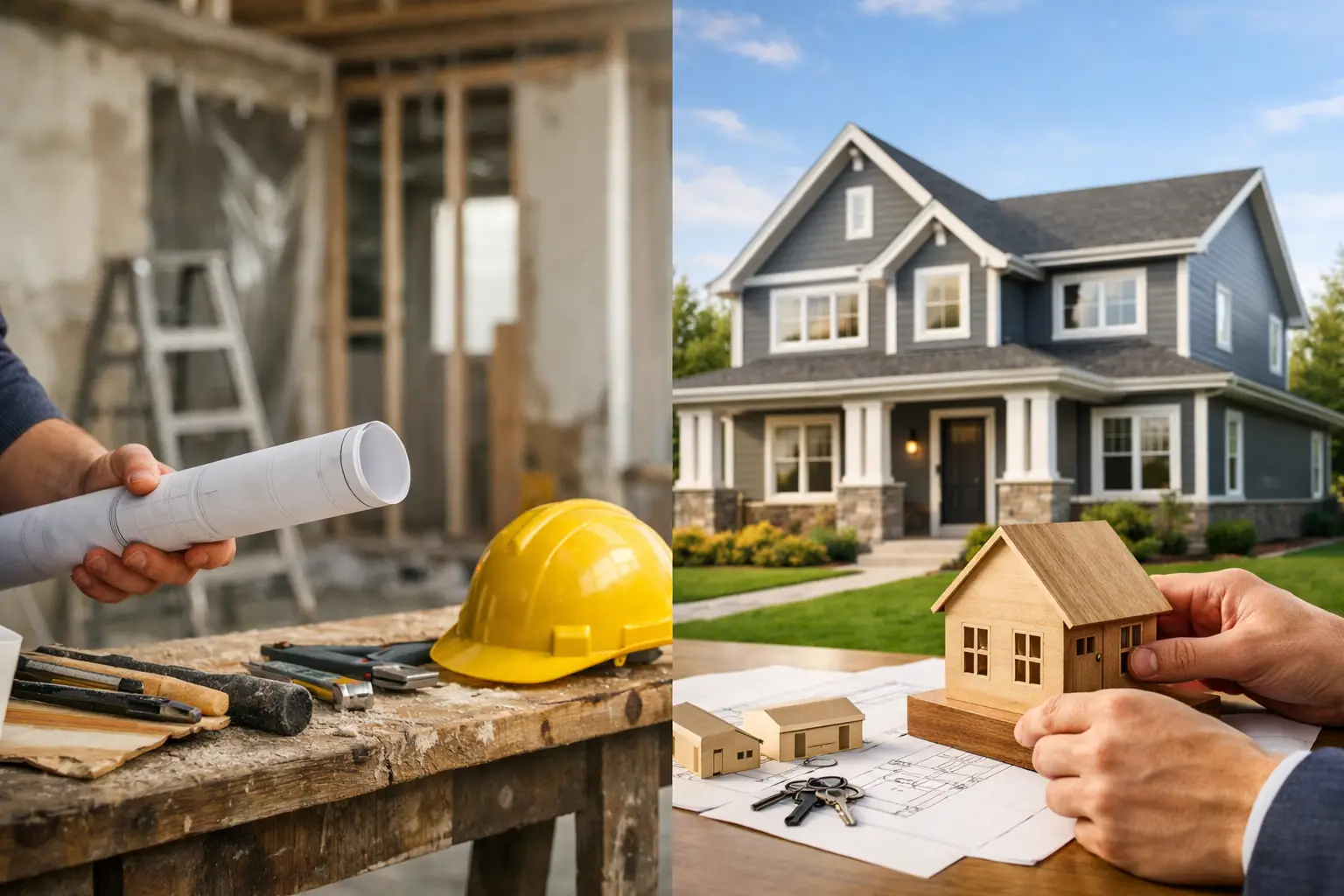
A house on a great lot can still be the wrong house for the way you live. That is where the remodel vs rebuild decision gets real. On the Peninsula, homeowners are often balancing aging construction, rising expectations for comfort and performance, and the financial weight of improving a valuable property. The right answer is not the cheaper option on paper. It is the path that gives you the best long-term result with the least compromise.
Why the remodel vs rebuild decision is rarely just about cost
Many homeowners start with a number in mind. If a remodel costs less than a new build, the assumption is that remodeling wins. In practice, the decision is more disciplined than that.
A remodel can preserve usable structure, shorten parts of the approval process, and let you improve the home without starting from zero. That matters when the existing layout is fundamentally sound, the foundation is serviceable, and the home has architectural character worth keeping. If you like your street, your lot, and much of the house itself, remodeling may protect both value and continuity.
But there is a point where remodeling becomes expensive surgery on a building that keeps resisting the plan. Hidden framing issues, undersized foundations, obsolete mechanical systems, and piecemeal additions from prior decades can turn a straightforward renovation into a chain of corrections. When too much of the budget goes into making an old structure cooperate, rebuilding starts to look less like a luxury and more like the cleaner investment.
This is why experienced builders do not treat remodel versus rebuild as a design preference. It is a feasibility question first.
Start with the house you actually have
The first step is not choosing finishes or sketching a dream kitchen. It is understanding the existing home at a structural and systems level.
A house may look acceptable from the street and still require major intervention once walls are opened. Older homes in San Mateo and Santa Clara Counties often carry a mix of original construction and later modifications. Some were updated well. Some were not. In a high-value market, that difference matters because you are not just buying nicer space. You are investing in reliability, safety, efficiency, and resale strength.
When remodeling usually makes sense
Remodeling is often the right path when the home has good bones and the changes are meaningful but contained. That might include a whole-house renovation where the structural shell remains largely intact, a major addition that solves a space problem, or a kitchen and bath transformation that modernizes daily life without forcing every system to be replaced.
If ceiling heights work, natural light is decent, the floor plan can be improved without excessive structural rework, and core systems can be upgraded logically, a remodel may offer strong value. You keep what is worth keeping and spend your budget where it changes the experience of the home.
There is also an emotional component. Some homes have craftsmanship, scale, or a neighborhood presence that owners want to retain. If the house still supports your long-term goals, preserving and improving it can be the more grounded choice.
When rebuilding deserves serious consideration
Rebuilding moves to the front when the home is fighting you on every major objective. If you want open common areas, better indoor-outdoor flow, larger primary suites, modern insulation, updated seismic performance, and cleaner mechanical distribution, forcing those goals into a deeply outdated structure can cost more than expected and still leave compromises behind.
Rebuilds also make sense when a home has serious deferred maintenance, poor original construction, extensive water damage, inadequate foundations, or a layout so inefficient that correction requires near-total demolition anyway. At that point, you may be paying premium dollars for a result that still carries old limitations.
A rebuild gives you a fresh start on structure, systems, energy performance, and design coherence. The trade-off is that it usually involves a longer path, greater upfront planning, and more extensive approvals.
The lot, zoning, and permit reality
On the Peninsula, the house is only part of the equation. The lot and local jurisdiction can push the remodel vs rebuild decision in one direction very quickly.
Setbacks, floor area ratio, height limits, lot coverage, tree protections, and neighborhood design review all affect what can actually be built. Some owners assume a rebuild automatically produces a larger or better home. That is not always true. In certain cases, the existing structure may enjoy legal nonconforming conditions that are difficult or impossible to replicate in a new build.
That means a remodel may preserve advantages you would lose if you tore the house down. On the other hand, if zoning allows a more efficient footprint and the existing home is not making good use of the lot, rebuilding may unlock far better planning.
This is where early due diligence pays for itself. A disciplined builder or design-build team should help you evaluate what the city will allow before you get attached to either path.
Budgeting beyond the headline number
Homeowners often compare a remodel estimate to a rebuild estimate and stop there. The better comparison is total project cost against total project outcome.
A remodel may come with more uncertainty because existing conditions are partly hidden until construction begins. Even with careful investigation, there can be surprises inside walls, below floors, or in old utility runs. Honest scope matters here. If a contractor prices a remodel too optimistically, the project can feel less expensive only until reality catches up.
A rebuild is usually more predictable once design and engineering are complete, but it may involve higher design costs, demolition, additional site work, and carrying costs during a longer timeline. Temporary housing can also shift the math.
The question is not just what each option costs to start. It is what each option costs to finish well. A premium result built right the first time is often the better financial decision than a lower initial budget that leaves major systems, awkward layouts, or durability issues unresolved.
Lifestyle disruption matters more than most people expect
If you plan to stay in the home during construction, remodeling may sound easier. Sometimes it is. Often it is not.
Large remodels can be highly disruptive because crews are working through an occupied structure, protecting finished areas, sequencing around partial access, and managing unknowns in real time. The project may preserve part of the house, but daily life can feel anything but stable.
A rebuild is more absolute. You move out, the old house comes down, and the process starts clean. That can feel more disruptive emotionally, yet operationally it is often simpler. For some families, especially those with demanding work schedules or young children, clarity is worth a great deal.
This is one reason accountability matters. Whether you remodel or rebuild, you want one team that scopes clearly, communicates changes early, and controls execution rather than blaming a chain of disconnected subs.
Design freedom versus structural compromise
One of the clearest dividing lines in this decision is how much compromise you are willing to accept.
Remodeling almost always means negotiating with the existing house. You may gain a beautiful kitchen, stronger circulation, and substantially better functionality while still accepting a few inherited conditions such as column locations, floor height transitions, or portions of the original footprint.
Rebuilding gives far more control. Room relationships, window placement, ceiling design, energy systems, storage planning, and future flexibility can all be developed as one coordinated solution. If your goal is a fully modern home tailored to how you live now and ten years from now, that freedom has real value.
That said, not every family needs a blank sheet of paper. Many want a home that feels dramatically better without taking on the time and complexity of new construction. The best answer depends on your threshold for compromise and your horizon for ownership.
How to approach the decision with more confidence
The most productive way to decide is to pressure-test both paths early. That means evaluating the existing condition of the home, confirming zoning and planning constraints, and comparing remodel and rebuild scenarios against the same standard: livability, durability, timeline, and total investment.
For high-value homes, this is not a place for vague allowances or soft assumptions. You want clear feasibility, realistic budgeting, and a team that can tell you when preserving the house is smart and when it is simply sentimental. A disciplined contractor with strong design-build coordination can save months of misdirection by identifying what the home can support before drawings go too far.
At Westward Construction, that kind of early clarity is part of protecting the client, not selling them a larger job. Sometimes the right move is to preserve and transform. Sometimes it is to start over with a house that finally matches the property beneath it.
The right home improvement decision is not the one that sounds biggest or safest. It is the one that leaves you with a home that works, holds value, and feels settled for the long term.