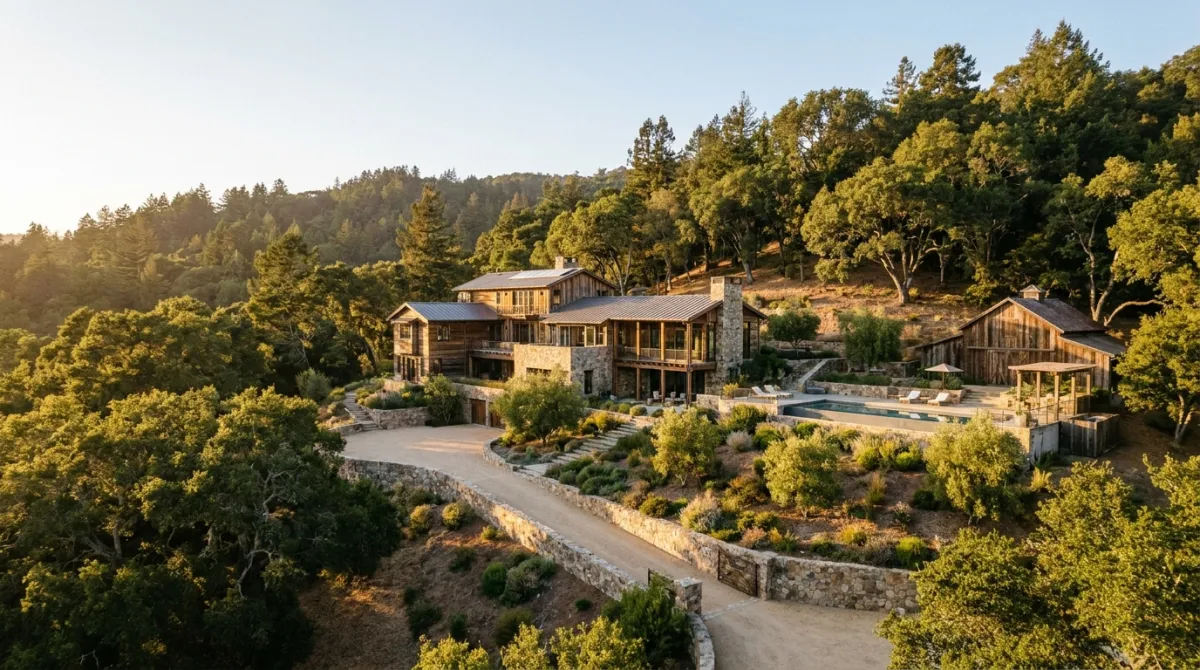
Woodside is its own world. Larger lots, wooded slopes, rural character, and on many properties, a private septic system instead of a city sewer connection. That last detail surprises people, because it means the thing that decides whether you can add a bedroom or a bathroom is buried in the ground and easy to forget about until it stops your plans.
We start Woodside projects by understanding what is underground before we get attached to what goes above it. Here is why.
How a remodel triggers septic review
If your property is on septic, adding bedrooms or bathrooms increases the demand on the system, and that typically triggers a county health review and percolation testing. The county wants to confirm the soil can handle the additional load and that the system, or a new one, can be sited correctly. This is not a rubber stamp. It is engineering, and it can reshape what your remodel looks like.
The specific thresholds and setbacks are set by San Mateo County Environmental Health and the Town of Woodside, and you should confirm the current requirements with them, because these rules change. The principle to plan around is steady: more fixtures means more septic scrutiny.
Slope and setbacks shape the whole site
Woodside's terrain adds another layer. Septic components have to respect slope limits and keep their distance from streams, wells, and structures. On a hillside lot, that can dictate where a new drainfield can go, which in turn dictates where your pool, deck, or new wing cannot go. The septic system and the site design are one puzzle, not two.
This is why we map the subterranean constraints first. It is far cheaper to design the addition around a viable drainfield location than to design the house you want and then discover the only workable septic site sits right under it.
The owner-builder blind spot
The most common Woodside mistake we see from homeowners managing their own projects is planning an expansion without checking the existing septic system's capacity, then having the permit application stopped by the county. By that point you have spent on drawings for a plan the ground will not support.
If you are running your own project, get ahead of it: have the soil percolation tested, understand how the septic tank and drainfield are sized for the number of bedrooms, and learn the setback requirements from property lines, wells, and the house. Coordinate this with a licensed professional early, while the design is still flexible enough to respond to what the testing finds.
Plan from the ground up, literally
None of this should scare you off a Woodside project. These properties are special precisely because they are rural and private. It just means the smart sequence is inverted from a city lot: you confirm what the land and the septic system will allow, then you design the home to fit. Do it in that order and the project is calm. Do it in reverse and you are redrawing plans.
If you are planning a remodel or addition in Woodside, we are glad to walk the property, talk through the septic and slope realities, and help you design something that works with the site rather than against it. Our process page explains how we handle this kind of early feasibility work.