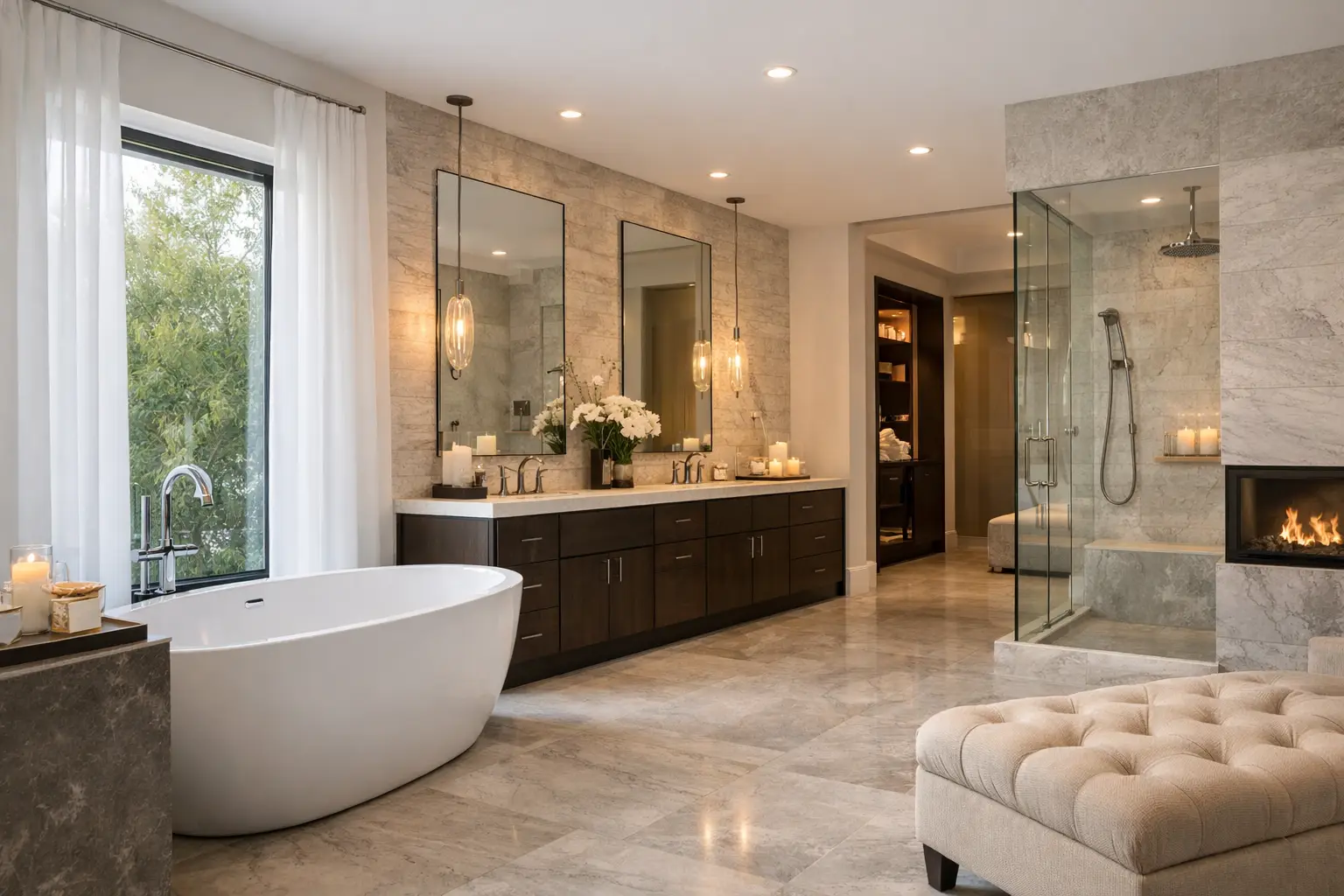
A luxury primary bathroom earns its keep in the first five minutes of the morning. If the room feels cold, crowded, dim, or hard to maintain, even expensive finishes start to feel like a missed opportunity. The best features for luxury primary bathrooms are the ones that improve daily use while holding up over time - not just the ones that photograph well.
For Peninsula homeowners, that distinction matters. In older homes especially, the challenge is rarely choosing a prettier tile or a more sculptural tub. It is building a room that performs: better lighting, smarter storage, stronger ventilation, cleaner plumbing layouts, and finishes that still look right years from now. Luxury is not excess. It is comfort, clarity, and execution built right the first time.
What actually makes a primary bathroom feel luxurious
A high-end bathroom usually succeeds because of restraint and coordination, not because every premium option was added to the plan. The best rooms have enough space around each function, a clear visual hierarchy, and materials that make sense together. They also solve quiet problems that homeowners notice every day, like where towels go, how steam leaves the room, whether lighting is flattering, and how quickly surfaces show wear.
That is why layout comes first. Before selecting stone slabs or plumbing fixtures, it is worth asking whether the room has the right proportions for a double vanity, a larger shower, a separate water closet, or better circulation. A luxury bathroom that feels cramped or awkward is still cramped and awkward. Good design-build planning fixes the structure before the finishes.
Best features for luxury primary bathrooms that improve daily life
1. A large walk-in shower with real function
If there is one feature that consistently outperforms trends, it is a generous walk-in shower. Not oversized for the sake of square footage, but sized so the experience feels calm and intuitive. That usually means a curb-less or low-threshold entry, enough depth to keep water contained, a built-in niche placed where products are easy to reach, and controls located so you can turn the water on without stepping into the spray.
Multiple showerheads can be excellent, but only when the plumbing system is designed to support them. Body sprays, rain heads, and hand showers all sound appealing. In practice, the best combination often depends on water pressure, maintenance tolerance, and how the household actually uses the space. A hand shower and one well-placed main head often deliver more long-term value than a crowded fixture package.
2. Heated floors that change the room more than you expect
Radiant floor heat is one of the clearest examples of a feature that feels understated on paper and substantial in real life. On cool mornings, especially in homes with stone or porcelain flooring, it changes how the room is experienced from the moment you walk in.
It also allows the bathroom to feel more comfortable without relying as heavily on forced air. That said, radiant heat works best when it is planned early. Floor buildup, insulation, waterproofing, and thermostat placement all need to be coordinated correctly. This is where careful construction matters more than the product itself.
3. Layered lighting, not just brighter lighting
Luxury bathrooms need more than recessed cans and a decorative fixture above the mirror. The room should support grooming, nighttime use, and a calmer atmosphere when you do not want every light on at once.
A strong lighting plan usually combines ambient lighting, task lighting at the vanity, and accent lighting where it adds depth. Vertical lighting at the mirror is often more flattering and useful than relying on overhead fixtures alone. Dimmers are not a small upgrade here - they are part of making the room work at different times of day.
4. A vanity designed around storage habits
Custom vanities are popular for good reason, but the real value is not just the furniture look. It is the chance to organize storage around actual routines. Deep drawers for hair tools, integrated outlets inside cabinets, pullouts for daily items, and dedicated linen storage can eliminate the visual clutter that makes a bathroom feel busy.
This is one area where honest scope matters. Homeowners often ask for clean, minimalist cabinetry, then realize later they need more enclosed storage than the design allowed. A luxury bathroom should feel edited, but it should also support real life without every surface becoming a landing zone.
5. Natural stone or tile used with discipline
Material selection carries a lot of visual weight, but it is easy to overspend without improving the room. The strongest luxury bathrooms usually use fewer materials, not more. One stone for the vanity, one primary tile field, and a controlled accent can create a far more elevated result than layering patterns, textures, and colors that compete with each other.
Natural stone can be beautiful, especially in a primary bath where the room is more private and design can feel personal. But it comes with trade-offs. Some stones need more maintenance, etch more easily, or vary significantly slab to slab. Porcelain has improved enough that in some applications it is the more practical premium choice, particularly for homeowners who want a lower-maintenance finish without sacrificing appearance.
The features that separate a nice bathroom from a truly high-end one
6. A freestanding tub, if the layout supports it
A freestanding tub remains a strong luxury signal, but it is not automatically the right move. In the right room, it creates a focal point and gives the bath a more architectural feel. In the wrong room, it can consume valuable square footage, complicate cleaning, and make circulation tighter than it should be.
The question is not whether a tub looks upscale. It is whether the room is large enough for the tub to feel intentional rather than crowded. For many homeowners, a larger shower delivers more daily return than a tub that gets used a few times a year.
7. Steam shower capability
For clients who will use it consistently, a steam shower can turn a primary bathroom into a true retreat. It adds comfort, supports wellness routines, and gives the room a custom-home level of finish.
It also requires real planning. Steam units involve enclosure details, sloped ceilings in some cases, proper sealing, dedicated electrical work, and ventilation strategy once the session ends. This is not a feature to add casually late in the design process. If it is worth doing, it is worth doing correctly.
8. Separate zones for privacy and flow
One of the best features for luxury primary bathrooms is not a fixture at all. It is zoning. When the toilet area, shower, vanity, and dressing functions are separated thoughtfully, the room feels calmer and works better for two people at once.
Sometimes that means a dedicated water closet. Sometimes it means placing the vanity away from the wet zone or creating a stronger connection between the bathroom and closet. These moves may not stand out in a photo, but they shape how the room performs every day.
9. High-performance ventilation
Ventilation is rarely the feature homeowners get excited about first, but poor ventilation can undermine the whole investment. Moisture lingers, mirrors fog excessively, finishes age faster, and the room never quite feels fresh.
A luxury bathroom should clear humidity efficiently and quietly. That may involve a stronger fan, better ducting, timer controls, or a more comprehensive approach if the room includes a steam shower. Done well, ventilation disappears into the background, which is exactly the point.
10. Smart controls that stay simple
Technology belongs in a luxury bathroom when it removes friction. Programmable heated floors, preset lighting scenes, integrated speakers, smart toilets, and digital shower controls can all improve the experience.
But there is a difference between useful and overcomplicated. The best systems are intuitive enough that guests can use them and durable enough that the room still functions well if one component needs service. Luxury should feel easy, not dependent on a learning curve.
11. Hardware and plumbing fixtures with staying power
The tactile parts of the room matter more than homeowners expect. The weight of a handle, the smoothness of a valve, the reliability of a drawer glide, the finish that still looks right after years of use - these details shape quality every day.
This is where value and price are not always the same. Some premium fixtures earn their cost through better engineering and serviceability. Others charge for novelty. A disciplined fixture package usually favors proven brands, timeless profiles, and finishes that fit the house rather than chasing whatever is newest.
Choosing the right luxury bathroom features for your home
Not every primary bathroom needs every premium feature. The right combination depends on the house, the homeowners, and the scope of the remodel. In a compact older Peninsula home, better layout, heated floors, improved lighting, and a larger shower may create more value than trying to force in a tub and steam room. In a custom home with more square footage, zoning and specialty features may make complete sense.
That is where construction experience protects the outcome. Good bathroom work is not just about design taste. It is about waterproofing, framing adjustments, electrical capacity, plumbing coordination, ventilation, and finish installation that holds up. For homeowners investing at a high level, one accountable team matters. Westward Construction approaches primary bath projects with that mindset - honest scope, coordinated execution, and craftsmanship that supports the design long after handoff.
The best luxury bathroom is not the one with the longest feature list. It is the one that feels quiet, capable, and easy to live with every single day.