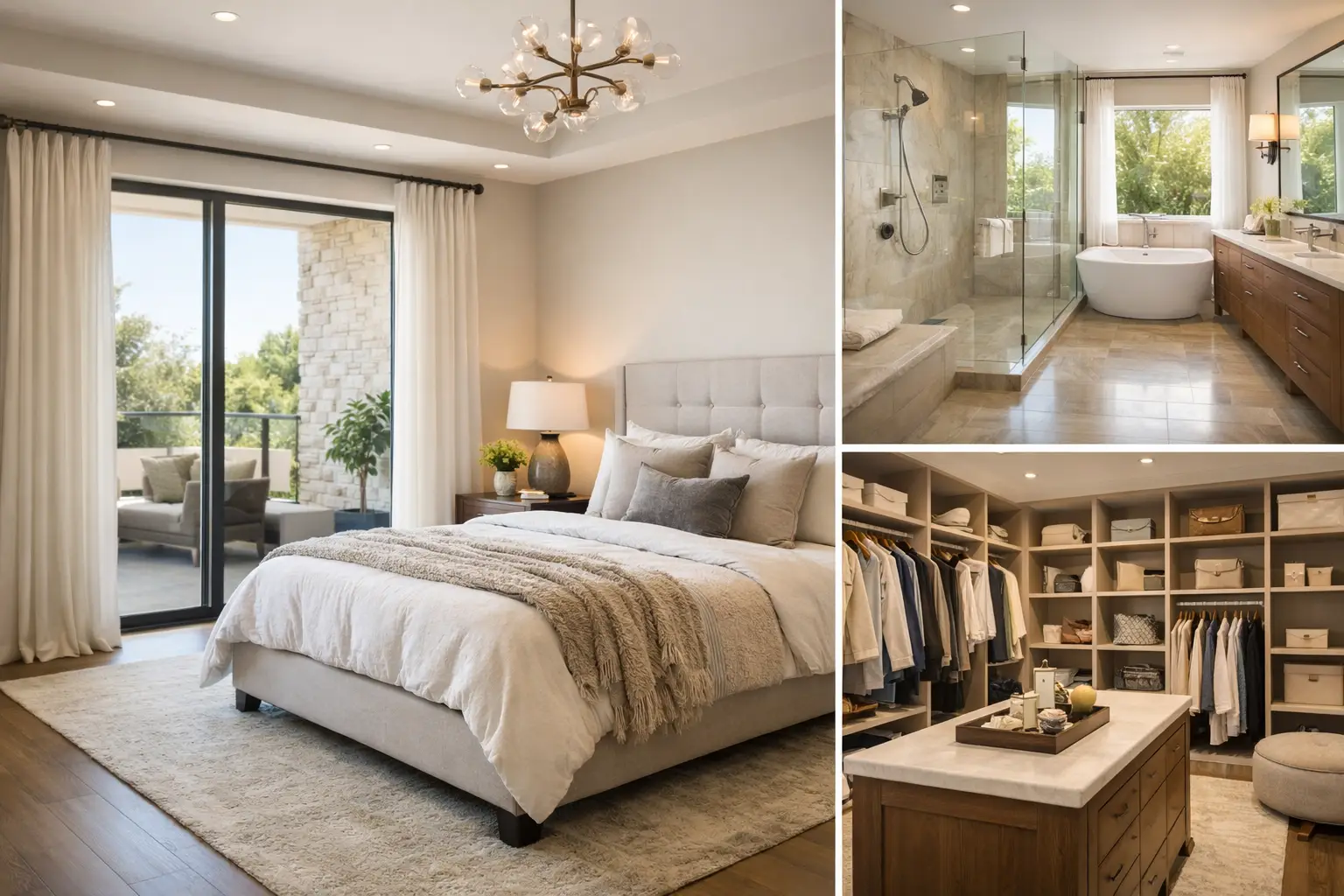
A well-planned bedroom addition can change how a house lives day to day, but the best primary suite addition ideas do more than add square footage. They solve privacy issues, improve circulation, create storage that older homes often lack, and make the home feel more complete rather than simply bigger. On the Peninsula, where lot conditions, permitting, and existing home character all matter, the right idea is the one that fits both your property and how you actually live.
What makes a primary suite addition successful
A strong primary suite addition starts with proportion and placement. Homeowners often focus first on the bedroom itself, but the suite works as a system. The sleeping area, bathroom, closet space, natural light, sound control, and path from the rest of the home all need to feel intentional.
That is where many additions either succeed or miss the mark. A large bedroom with an undersized bath still feels compromised. A beautiful bath without enough closet space creates daily frustration. And a suite placed at the wrong end of the house can make the floor plan feel disjointed. Built right the first time means looking at the suite as part of the entire home, not as a stand-alone room package.
Primary suite addition ideas that add real value
1. Create separation from the main living areas
One of the most effective primary suite addition ideas is also one of the simplest: place the suite where it gains real privacy. In many older Peninsula homes, bedrooms sit close to the kitchen, family room, or front entry. That may have worked decades ago, but it often feels noisy and exposed today.
A rear addition or a side-yard expansion can create a quieter retreat with better garden views and less street noise. If the lot allows, a short transitional hallway can help the suite feel private without making it disconnected. That small planning move often makes the addition feel much more luxurious.
2. Prioritize a bathroom that feels generous, not oversized
Primary bathrooms should feel comfortable and easy to use, but bigger is not always better. What matters is clear spacing, practical storage, and a layout that supports two people without crowding.
In many projects, a double vanity, a large walk-in shower, a private water closet, and durable built-in storage do more for daily comfort than a rarely used freestanding tub. That said, if soaking is part of how you unwind, a tub can absolutely be worth the space. The point is to design around habits, not trends.
On the construction side, bathroom location matters because plumbing runs, structural changes, and ventilation can affect cost quickly. Tucking the new bath near existing utility lines can help control scope, though it is not always the top priority if it compromises the layout.
3. Build in a walk-in closet that actually functions
Closet space is one of the first reasons homeowners pursue a primary suite addition, especially in homes built before modern storage expectations. The best closet designs are not just large. They are organized around how you dress and store things.
That might mean separate hanging zones, integrated drawers, closed cabinetry for visual calm, or a center island if the footprint allows. In tighter additions, reach-in wardrobes with custom millwork can sometimes outperform a poorly proportioned walk-in. It depends on the dimensions. A narrow walk-in that forces awkward circulation may look good on paper but feel inefficient in practice.
4. Use windows to create calm and privacy at the same time
Natural light is essential in a primary suite, but privacy has to be protected. That balance is especially important in close-in neighborhoods like Palo Alto, Burlingame, and Menlo Park, where neighboring homes may sit near lot lines.
A thoughtful window plan might include taller windows, corner glazing facing a yard, clerestory openings in the bathroom, or carefully placed glass doors that open to a private patio. The right move depends on setbacks, overlooking conditions, and orientation. Good design is not just about bringing in more light. It is about bringing in the right light without exposing the room.
5. Add indoor-outdoor connection where the site supports it
For some homes, one of the strongest primary suite addition ideas is direct access to the outdoors. A small terrace, private garden court, or covered patio can make the suite feel like a true retreat.
This works best when the yard offers actual privacy and the transition feels natural. If the exterior space is too exposed or too narrow to use comfortably, those square feet may be better invested inside. In higher-end remodels, clients often appreciate this connection most in the shoulder seasons and early mornings, when stepping outside from the suite adds a quiet sense of separation from the rest of the house.
6. Consider a first-floor suite for long-term flexibility
A first-floor primary suite can be a smart investment for homeowners planning to stay in the home for many years. It supports aging in place, simplifies daily movement, and can reduce dependence on stairs without making the house feel clinical.
This approach is especially valuable in two-story homes where the existing upstairs bedroom configuration no longer fits long-term goals. It can also improve resale appeal, since many buyers see a ground-floor primary suite as a premium feature. The trade-off is that first-floor additions often affect yard space more directly, so site planning becomes critical.
7. Match the addition to the architecture of the home
A primary suite should feel like it belongs. That sounds obvious, but it takes discipline to execute well. Exterior rooflines, window proportions, siding details, and interior transitions all need to align with the original home or with the larger remodel vision.
This is particularly important in neighborhoods with strong architectural character. A seamless addition protects both aesthetics and property value. Sometimes that means keeping the new suite understated from the street. Other times it means using the addition to correct earlier remodel work that never quite fit. Either way, the goal is not to make the addition invisible. It is to make it coherent.
Design decisions that affect cost and complexity
The most appealing primary suite addition ideas still need to pass through reality: zoning, structure, utilities, and budget. On the Peninsula, that process deserves serious attention early.
Second-story additions can preserve yard space, but they usually introduce more structural work, stair considerations, and disruption to the existing home. First-floor additions are often simpler to build, though setbacks, lot coverage, and drainage can become limiting factors. If your home sits on a sloped site, the foundation strategy may also shape what is feasible.
Then there is the question of scope alignment. If the suite addition exposes outdated electrical, HVAC limitations, or roofing issues, it may be more cost-effective to address them during the project rather than patch around them. Honest scope matters here. It is better to understand those realities up front than discover them mid-construction.
Common mistakes to avoid
The most common mistake is treating the bedroom as the headline and the rest of the suite as secondary. In practice, homeowners usually feel the quality of the bathroom, closet, sound separation, and lighting every single day.
Another mistake is forcing an addition into leftover space without respecting circulation. If getting to the suite requires passing through awkward hallways or compresses adjacent rooms, the whole house can feel compromised. A good addition should improve the plan, not just enlarge it.
It is also easy to overbuild for the neighborhood or underbuild for the home. A suite should support your lifestyle and make sense for the property value, but it should also feel proportionate to the house. Balance matters.
Why planning and execution need to stay connected
Primary suite additions are rarely simple room additions. They involve design judgment, city approvals, structural coordination, finish integration, and steady field execution. When those pieces are fragmented across too many parties, details get lost and homeowners end up managing problems they should never have inherited.
That is why many clients prefer a team that can coordinate feasibility, pricing, permits, and construction under one accountable process. Westward Construction approaches additions that way because the goal is not just a beautiful new suite. It is a project that is clearly scoped, properly built, and managed with enough discipline to protect both the home and the client experience.
The best suite additions feel obvious once they are done. They bring quiet where the house was noisy, order where it was cramped, and comfort where it was overdue. If you are considering one, start with how you want to live in the home five and ten years from now. The right idea usually becomes clear from there.