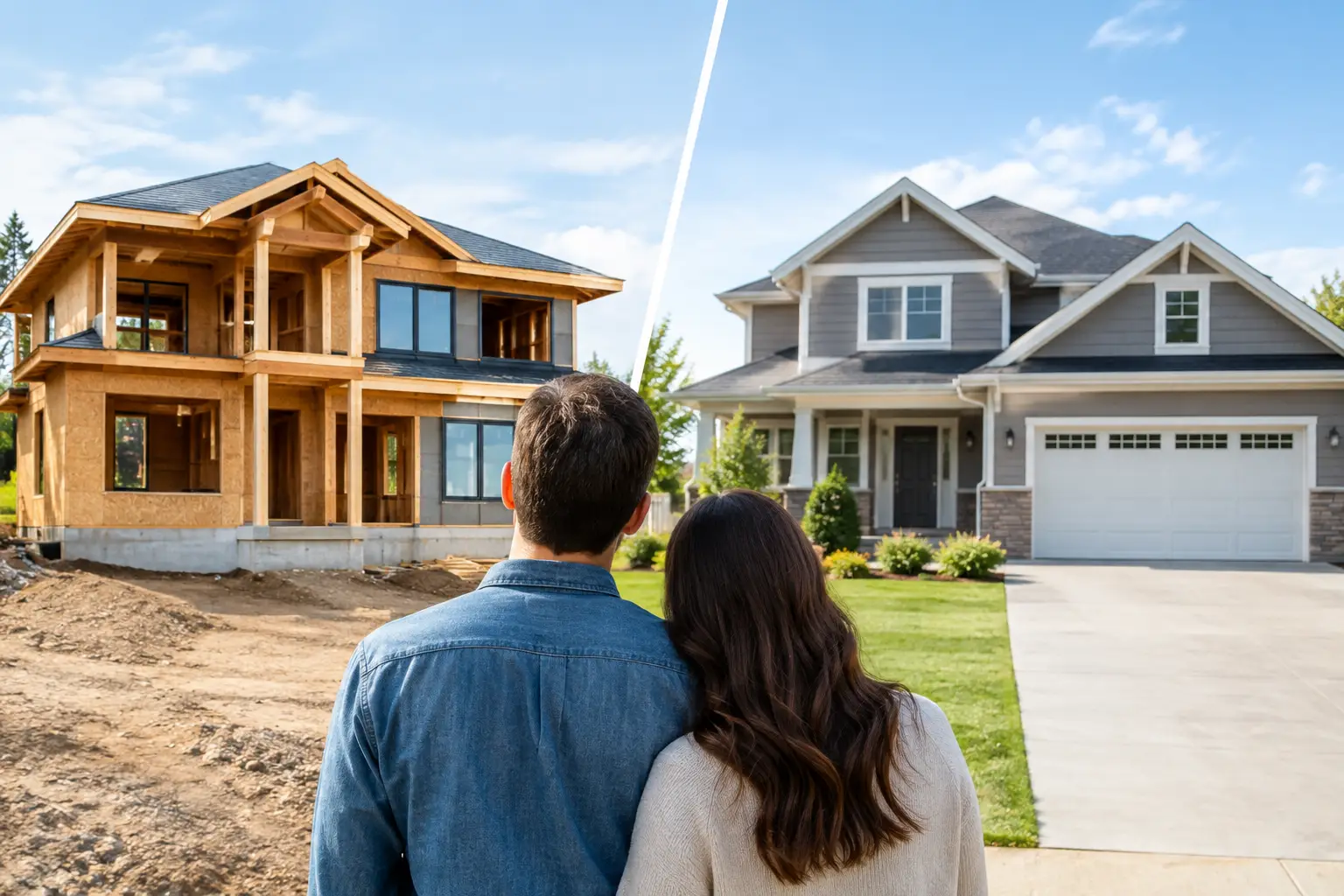
A home can look finished long before it feels right. For Peninsula homeowners weighing a custom home versus spec home, the real decision is not simply whether to build or buy. It is whether you want to shape the home around your life from the beginning, or choose a completed vision that is ready for you now.
Both paths can lead to an exceptional property. A well-designed spec home can offer immediate convenience, polished finishes, and a predictable purchase process. A custom home can provide a more personal result, greater control over quality, and a layout that works for your family for decades. The better choice depends on what you value most: speed, certainty, design control, location, or long-term flexibility.
Custom Home Versus Spec Home: The Core Difference
A spec home is built by a developer or builder before a buyer is under contract. The builder selects the plans, materials, finishes, and many of the design details based on what they believe will appeal to the local market. By the time you buy, the home may be complete or close enough to completion that only limited choices remain.
A custom home is planned around a specific owner, site, and set of priorities. You work with an architect, designer, and builder to determine the floor plan, exterior character, systems, material selections, and level of finish. The process takes more time and requires more decisions, but the result is built for how you actually live.
There is also a middle ground. Some homes are marketed as semi-custom, meaning the builder offers a defined plan with selected choices for finishes or minor layout changes. This can work well when you want more input than a spec home allows without taking on the full design and permitting process.
What Changes From One Path to the Other
Design freedom and daily function
The clearest advantage of a custom home is control. A family with teenagers may want separate study space and durable gathering areas. Empty nesters may prioritize a first-floor primary suite, accessible circulation, and a low-maintenance landscape. Someone who entertains often may care more about a true working pantry, an outdoor kitchen, or a dining room that opens fully to the garden.
In a custom project, those needs guide the plan early, when changes are thoughtful and cost-effective. You can orient rooms for privacy or afternoon light, plan storage where it is needed, and specify the level of acoustic separation, insulation, and mechanical performance you expect.
A spec home may still be beautifully designed, but it is designed for a broad buyer profile. If its room sizes, circulation, and finish level already align with your priorities, that is an advantage. If they do not, remodeling a recently completed luxury home can be an expensive way to correct choices that could have been resolved before construction.
Budget certainty and value
Many buyers assume a spec home is always less expensive. The purchase price is certainly easier to see upfront, and there is value in knowing what you are committing to before closing. You avoid managing a long sequence of selections, allowances, and construction decisions.
But price certainty is not the same as value. A custom home lets you decide where the investment belongs. You may spend more on windows, structural detailing, waterproofing, cabinetry, or a high-performance mechanical system while simplifying areas that matter less to you. That can create a home with better durability and lower operating costs, not just a more customized appearance.
Custom construction does require an honest scope from the outset. Land conditions, utility upgrades, engineering requirements, and jurisdictional review can affect cost. The right builder does not hide those realities behind an attractive early number. Clear specifications, disciplined estimating, and proactive change-order communication protect the budget as the design develops.
Timeline and decision-making
A spec home wins when time is the primary concern. If you need to move within a few months, a completed or nearly completed home may be the practical choice. You can walk through it, understand its character, and plan around a defined closing date.
A custom home typically requires a longer runway. Site evaluation, architecture, engineering, planning review, permits, and construction all take time. In communities such as Palo Alto, Atherton, Hillsborough, Los Altos, and Menlo Park, review timelines can vary considerably based on zoning, trees, grading, historic considerations, and neighborhood requirements.
That longer schedule is not wasted time when it is managed well. Early coordination helps avoid late surprises, and decisions made before construction are generally less disruptive than decisions made after walls are open. Still, a custom project asks owners to stay engaged. You are not just selecting a house. You are helping define it.
Quality control and accountability
The visible finishes in a home matter, but the work behind the walls matters longer. Roofing details, electrical planning, plumbing installation, framing, drainage, insulation, and waterproofing determine how a home performs after the photographs are taken.
With a spec home, ask who built it, who stands behind the work, and what warranty service looks like after closing. Review the plans and specifications where possible. Look beyond the appliance package and stone selections to understand the systems, site work, and construction standards.
With a custom home, accountability should be built into the process. One contract you can hold accountable, consistent project management, clear documentation, and strong coordination between design and field teams reduce the chances that responsibility gets passed from one party to another. A builder with in-house trades can also maintain closer control over critical work and scheduling.
When a Spec Home Is the Better Choice
A spec home can be the right decision when the location is exceptional, the floor plan genuinely works, and the quality meets your expectations. For buyers relocating for work, families with a fixed school-year deadline, or owners who do not want a multi-year planning process, the convenience is meaningful.
It can also be a strong option when you find a home whose design already reflects your taste. The key is to buy it for what it is, not for what you hope it could become after a series of costly changes. Before committing, consider whether the kitchen, primary suite, storage, outdoor areas, and home office needs are truly resolved.
When a Custom Home Is Worth the Commitment
A custom home is usually the stronger choice when you have a specific property, a long-term ownership horizon, and clear priorities that are difficult to find in the existing market. This is especially true for older Peninsula properties where an exceptional lot may be paired with an aging or poorly configured house.
It is also the right path when details matter to you beyond surface appearance. Perhaps you want a kitchen planned around how you cook, an ADU for family or future income, a dedicated wellness space, or architecture that respects the scale of the neighborhood. Those are not add-ons. They affect the entire plan, permit strategy, structure, and budget.
Custom building is not about making every element unusual. It is about making the important elements intentional. A disciplined design-build team can help distinguish between investments that improve daily life and property value and selections that add complexity without a lasting return.
Start With the Property, Not the Floor Plan
On the Peninsula, the site often determines more than homeowners expect. Setbacks, height limits, lot coverage, utility capacity, soil conditions, mature trees, and neighborhood design review can all shape what is possible. A beautiful floor plan that ignores those constraints is only a concept, not a buildable project.
Before deciding between a custom home and a spec home, assess the property with the same care you would assess the architecture. If you own land or are considering a teardown, early feasibility work can clarify building envelope, likely approval requirements, and potential costs. If you are considering a spec home, look closely at how the builder used the lot. Does the home take advantage of light, privacy, views, and outdoor living, or does it simply maximize square footage?
The right home should feel settled into its site. That is often where thoughtful planning shows its value.
Make the Decision Around Your Next Ten Years
A home purchase or building project should support the life you expect to have, not just the move you need to make this year. Consider how your household may change, whether you need flexible space for work or family, and how much you want to manage during the process. Be equally clear about your tolerance for compromise. Some buyers are comfortable adapting to an existing layout; others know that a home must work precisely from day one.
A spec home offers a finished answer. A custom home gives you the chance to ask better questions before the answer is built. For a long-term Peninsula property, that patience can be the difference between a house that impresses at closing and a home that continues to serve you well years later.