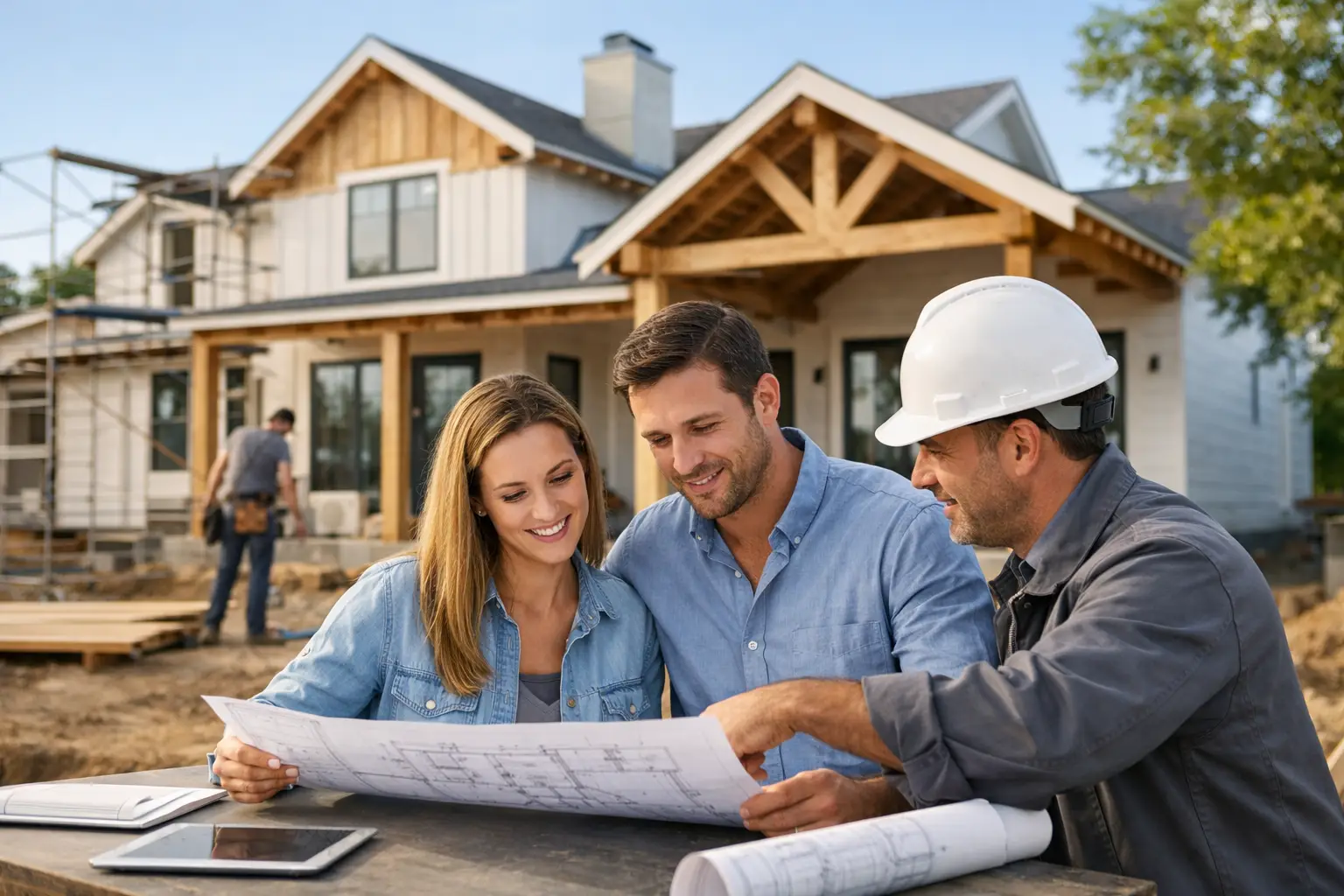
Building a custom home is not a single decision. It is a chain of decisions that affect budget, timeline, livability, and long-term value. When homeowners ask, how does custom home building work, what they usually want to know is this: who is responsible for what, when the real costs become clear, and how to avoid surprises once construction starts.
On the Peninsula, those questions matter even more. Site constraints, planning rules, utility requirements, structural engineering, and local permit review can all shape the project before a shovel ever hits the ground. A well-built custom home starts long before construction. It starts with honest scope, disciplined planning, and a builder who can connect design intent to field execution.
How does custom home building work from start to finish?
At a high level, the process moves through feasibility, design, pricing, permits, construction, and closeout. That sounds straightforward, but each phase affects the next. If the early work is rushed, the downstream cost is usually higher in both dollars and stress.
The first step is defining the project clearly. That includes the size of the home, architectural style, room priorities, site opportunities, and budget expectations. Homeowners often begin with a vision board or a rough program. A better starting point is a practical conversation about how the house should function every day. Entertaining, privacy, aging in place, home office needs, natural light, storage, and indoor-outdoor flow all belong in that discussion.
From there, the team evaluates feasibility. This is where a lot of custom home projects either gain momentum or get reshaped. Zoning, setbacks, height limits, lot coverage, tree restrictions, utility access, drainage, easements, and fire requirements can all influence what is possible. In higher-value neighborhoods, design review and neighborhood expectations may also matter. A good feasibility phase does not just ask, can this be built? It asks, can this be built efficiently, within budget, and without avoidable redesign.
The design phase sets the tone for everything after
Once feasibility is established, architectural design begins. This usually starts with conceptual plans and develops into detailed drawings coordinated with structural, civil, and sometimes energy or geotechnical consultants. Homeowners tend to focus on floor plans and finishes here, but the real value is in coordination. The more complete the design package, the more accurate the pricing and the smoother the construction.
This is also where trade-offs show up. Large expanses of glass may improve views and natural light, but they can affect structural complexity, energy performance, and cost. A dramatic cantilever or floating stair may look exceptional on paper, but it may require more engineering, longer lead times, and tighter tolerances in the field. None of that makes those choices wrong. It just means design decisions should be made with construction realities in mind.
For homeowners, this is often the point where the right builder adds real value. A builder with strong design-build coordination can flag constructability issues early, suggest ways to protect the design while controlling cost, and help align materials, systems, and sequencing before the plans go out for permit.
Pricing is not guesswork if the scope is honest
One of the biggest misunderstandings in custom home building is when the budget becomes real. Early budget ranges can be helpful, but they are still ranges. Meaningful pricing happens when the plans, specifications, and allowances are developed enough to support a disciplined scope.
That scope should cover far more than framing and finishes. It should address demolition if needed, excavation, foundations, waterproofing, windows, roofing, mechanical systems, electrical capacity, plumbing fixtures, insulation, interior trim, cabinetry, tile, appliances, and site work. It should also identify assumptions. If those assumptions are vague, change orders tend to multiply later.
This is why transparency matters so much. Homeowners should understand what is included, what is excluded, and where selections still need to be finalized. A premium project does not need a bargain number. It needs a trustworthy number. The goal is not to make the budget look artificially low at the start. The goal is to build the project right the first time with eyes open.
Permits and approvals are part of the build, not a side task
After design and pricing alignment, the project moves into permit preparation and city review. On the Peninsula, this can take time, and timelines vary widely by jurisdiction and project complexity. Planning review, building plan check, structural comments, energy compliance, public works requirements, and utility coordination can all come into play.
This phase is often frustrating for homeowners because progress can feel invisible. But this is where a lot of risk gets managed. Revisions, clarifications, and agency responses need to be handled carefully because errors at the permit stage can create expensive field issues later. A builder who understands local processes can help keep submittals coordinated and prevent disconnects between what was designed, what was approved, and what can actually be built.
Construction starts long before the first framed wall
When permits are issued, many homeowners think the hard part is over. In reality, construction is where planning gets tested. Before major work begins, the team should confirm scheduling, long-lead procurement, site logistics, temporary protections, utility shutoffs, and inspection sequencing.
Then the physical work begins with site preparation, grading, excavation, and foundation work. After that comes framing, which gives the home its form and reveals whether the planning and measurements were disciplined. Mechanical, electrical, and plumbing systems follow, along with inspections before walls are insulated and closed.
From there, the house starts to feel real. Drywall, millwork, cabinetry, tile, flooring, interior trim, paint, lighting, plumbing fixtures, and finish hardware all come together. Exterior work often runs in parallel, including roofing, waterproofing, cladding, hardscape, drainage, and landscaping coordination.
This is also where builder accountability matters most. Custom homes involve many moving parts, and sequencing problems can cost weeks. If critical trades are managed loosely, the homeowner often feels it first through delays, finger-pointing, or quality inconsistencies. That is one reason many clients prefer a contractor with stronger in-house capabilities and tighter day-to-day control. At Westward Construction, that accountability is reinforced by keeping key trades like electrical, plumbing, and roofing on payroll rather than treating every phase as a handoff to a rotating cast of subs.
Communication is what keeps complexity from becoming chaos
No custom home project is perfectly linear. Selections change. Lead times shift. Site conditions appear once walls are opened or excavation begins. City comments may require revisions. The difference between a stressful project and a manageable one is usually not whether issues arise. It is how they are communicated and resolved.
Homeowners should expect regular updates, current schedule visibility, and fast notice when a decision will affect cost or timing. Change orders are not automatically a red flag. Poorly explained change orders are. If a modification improves the home, addresses an unforeseen condition, or reflects a client choice, it should be documented clearly and priced before the work moves ahead whenever possible.
This is especially important in high-end residential construction, where the finish level is demanding and late-stage decisions can have ripple effects. A cabinetry change may affect electrical rough-in. A slab material with a longer lead time may alter installation sequencing. Strong communication protects both the project and the relationship.
Final inspections, punch lists, and handoff
Toward the end of the project, the work shifts from major production to refinement. Final inspections are scheduled, systems are tested, finishes are reviewed, and punch list items are completed. This stage should not feel rushed. The details matter more now, not less.
A proper handoff includes more than keys. Homeowners should receive guidance on operating systems, maintaining finishes, and understanding warranties. A custom home is a major investment, and the builder's responsibility should extend beyond the day the project wraps. Post-completion support matters because even a well-executed home may need adjustments as systems settle and the family begins living in the space.
What homeowners should expect from the right builder
If you are asking how does custom home building work, the practical answer is that it works best when one accountable team helps connect the early vision to the finished house. The process is not just design, then permits, then construction. It is coordination across every stage, with clear scope, realistic pricing, disciplined scheduling, and craftsmanship that holds up years after move-in.
For homeowners in places like Atherton, Palo Alto, Hillsborough, Los Altos, Menlo Park, and Woodside, that level of control is not a luxury. It is what protects the investment. The right custom home should feel personal, but the process should feel professional.
The best projects do not happen because everything goes perfectly. They happen because the team is prepared, accountable, and steady when complexity shows up.