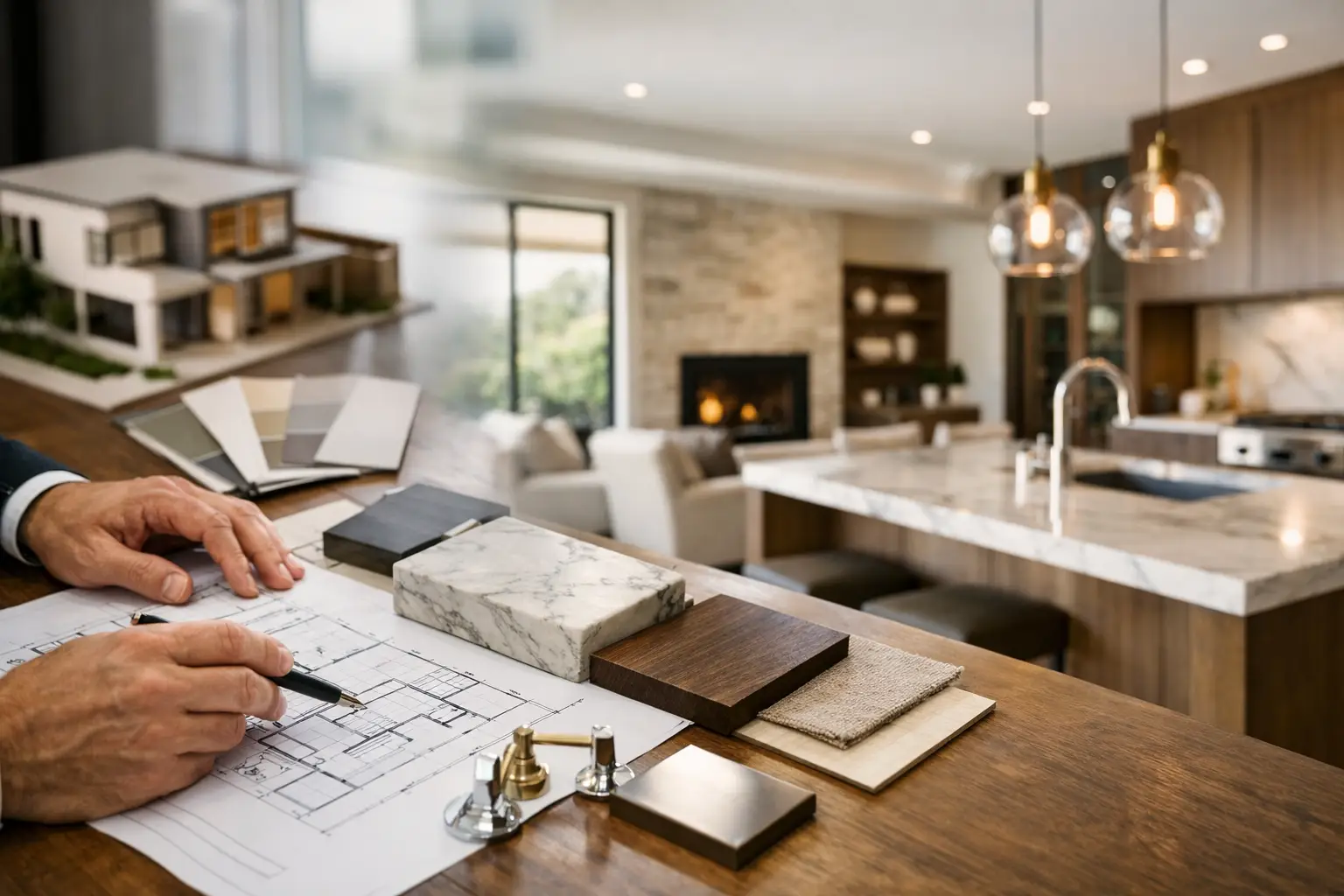
A luxury home remodel is not defined by a waterfall island, imported stone, or a statement light fixture. Those choices matter, but the real standard is less visible: a home that works beautifully for the people living in it, performs reliably behind the walls, and holds its value through years of use. On the San Francisco Peninsula, where aging homes, steep sites, strict jurisdictions, and high expectations often meet in one project, that standard requires disciplined planning as much as good taste.
The best remodels feel effortless when they are complete. Getting there is rarely effortless. It takes an honest scope, coordinated design decisions, a realistic budget, and one accountable construction team that can protect the details from early feasibility through final inspection.
Start With the Life You Want the Home to Support
Many homeowners begin with a room: a kitchen that feels dated, a primary bath with an awkward layout, or a family room that no longer fits the way the household gathers. Those are valid starting points. Before selecting finishes, however, it pays to step back and define the larger purpose of the project.
Is the home meant to serve a growing family for the next 15 years? Is it a long-term property that needs better indoor-outdoor living, a private work area, or space for aging parents? Will a future addition, ADU, or whole-house renovation follow? The answers shape decisions that are expensive to reverse later, including circulation, structural planning, electrical capacity, plumbing locations, and rooflines.
A refined kitchen is more useful when it supports how the household actually cooks and entertains. A beautiful primary suite is more valuable when it improves privacy, storage, and daily routines. Luxury is not excess for its own sake. It is thoughtful function, durable materials, and spaces that continue to make sense after the novelty wears off.
Build the Luxury Home Remodel Around the Right Scope
The scope is the foundation of every successful project. It should clearly establish what is being built, what is being retained, who is responsible for each decision, and where allowances or unknown conditions remain. Vague scope is one of the fastest ways for a promising remodel to become stressful.
Older Peninsula homes can carry surprises behind plaster, drywall, and finished floors. Undersized electrical systems, deteriorated plumbing, dry rot, outdated framing, and prior unpermitted work are not unusual. A responsible builder does not pretend those risks do not exist. The better approach is to investigate early where possible, identify likely exposure, and explain how discoveries will be handled if they arise during construction.
This is where transparent budgeting matters. A low initial number that excludes necessary work is not a savings. It simply moves the conversation later, when choices are more limited and construction is already underway. A thorough budget should distinguish between fixed work, owner-selected finishes, design contingencies, and potential site or existing-condition issues. Clients deserve to understand the numbers before they commit, not after walls are open.
Invest in What Cannot Be Easily Changed
There is a practical hierarchy to remodeling investment. Prioritize the structure, building envelope, mechanical systems, waterproofing, windows, insulation, and sound control before putting every available dollar into decorative finishes. These elements protect the home, comfort, and long-term maintenance costs.
That does not mean compromising on design. It means sequencing decisions intelligently. Natural stone, custom cabinetry, handcrafted tile, and architectural lighting are most satisfying when the surfaces beneath them are level, dry, well-framed, and built to support them. Fine finishes cannot compensate for poor preparation.
Design and Construction Need to Stay Connected
A strong design can lose its impact when it is not translated carefully in the field. Conversely, a capable construction team can only protect what has been properly documented and coordinated. The most successful luxury home remodel projects keep designers, architects, engineers, and builders aligned from the beginning.
Early builder involvement helps test whether a concept fits the property, the jurisdiction, and the investment range. It can reveal a costly structural implication before it becomes part of the permit set, identify a better location for mechanical equipment, or flag a lead-time concern while there is still time to make a thoughtful selection. This is not about limiting design ambition. It is about making sure ambition can be executed well.
Detailed drawings and finish schedules also reduce pressure during construction. The more that is resolved before demolition, the fewer urgent decisions homeowners need to make while living through an active jobsite. Some choices will always evolve. The goal is not to eliminate every change, but to make changes deliberate, priced clearly, and understood before work proceeds.
Plan for Permits Before Promising a Schedule
In Hillsborough, Atherton, Palo Alto, Menlo Park, Los Altos, Woodside, Burlingame, and neighboring communities, permitting is a meaningful part of the project. Requirements vary by jurisdiction and may involve planning review, design review, historic considerations, tree protection, energy compliance, utility coordination, or geotechnical review.
A realistic schedule accounts for those steps. It also accounts for the lead time needed for custom windows, appliances, cabinetry, specialty stone, and other selections that can affect critical construction paths. Promising an aggressive start date before plans, permits, and procurement are understood may sound reassuring, but it rarely protects the homeowner.
The right team manages the process proactively. That means coordinating permit submissions, responding to plan-check comments, tracking approvals, ordering long-lead items at the right time, and keeping clients informed when conditions affect the schedule. Clear weekly updates are not a courtesy. They are how homeowners maintain confidence in a complex project.
Choose Accountability Over a Patchwork of Vendors
A luxury remodel involves many moving parts, from demolition and framing to electrical, plumbing, roofing, cabinetry, finishes, and inspections. When responsibility is scattered among disconnected parties, the homeowner can end up in the middle of avoidable disputes about schedule, quality, and cost.
A full-service general contractor brings those responsibilities under one contract you can hold accountable. This matters even more when key trades are managed in-house. Direct control of electrical, plumbing, and roofing work strengthens coordination, creates better schedule discipline, and reduces the handoffs where quality issues often begin.
At Westward Construction, that control is central to the way projects are delivered. The team coordinates the people, sequencing, and decisions required to carry a project from feasibility through construction and final inspection. The goal is straightforward: build it right the first time, communicate early when something changes, and stand behind the work after completion.
Ask Better Questions Before You Hire
The right contractor should be able to explain how scope is developed, how change orders are documented, who supervises the work daily, and how trade quality is verified. Ask how often you will receive updates, whether the proposed schedule accounts for permitting and procurement, and what support is available after the final walkthrough.
References are useful, but listen for more than compliments about the finished room. Ask former clients how the builder handled difficult discoveries, whether communication remained steady under pressure, and whether the jobsite was managed with respect for an occupied home. Craftsmanship is revealed in the details, but professionalism is often revealed when conditions are not ideal.
Make Selections That Will Age With the House
Trends have a place, especially in lighting, decorative hardware, paint, and furnishings that can be changed without major disruption. Permanent selections deserve a longer view. Cabinet proportions, flooring, plumbing layouts, stone applications, and exterior materials should relate to the architecture of the house and the way the property will be used over time.
Durability should be evaluated honestly. A material that looks exceptional in a showroom may not be the right choice for a busy family kitchen, a sunny room, or a bath used by children and guests. Natural materials can develop patina, which many homeowners value. Others prefer a more uniform appearance. Neither choice is inherently better, but the maintenance expectations should be clear before installation.
The strongest homes balance character with restraint. They do not need every surface to compete for attention. A well-proportioned room, thoughtful daylight, tailored storage, and precise craftsmanship often create a more lasting impression than a collection of expensive features.
Protect the Experience While the Work Is Underway
Construction affects daily life, particularly when homeowners remain in the house. A well-managed project establishes jobsite expectations early: access routes, dust control, protection of completed areas, working hours, security, communication procedures, and plans for utility interruptions.
For a major renovation, temporary living arrangements may be the better decision. It depends on the project boundaries, household needs, and how much of the home will remain functional. There is no universal answer, but there should be an honest discussion before construction begins rather than an improvised solution halfway through.
A luxury home remodel should leave more than a beautiful set of rooms. It should leave you with confidence in what is behind the walls, clarity about what was built, and a home that is ready to support the next chapter of your life. Choose the team that treats those outcomes as part of the craftsmanship, not as extras.