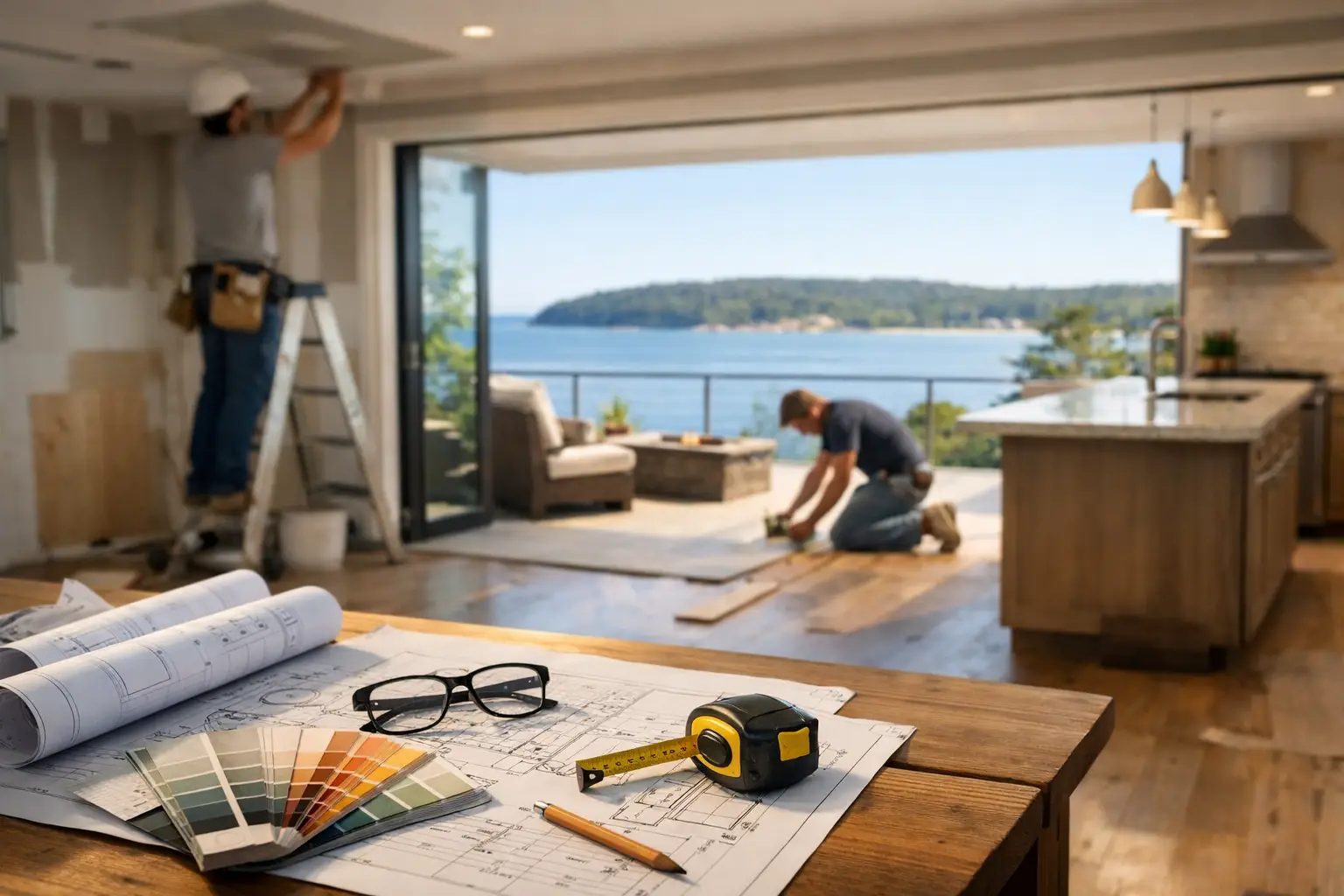
A whole home renovation guide should start with one hard truth: once walls open, a house tells the truth about itself. In older Peninsula homes, that can mean outdated wiring, undersized plumbing, poor insulation, unpermitted past work, or structural changes needed to support the layout you actually want. The homeowners who handle this process best are not the ones chasing the lowest bid. They are the ones who plan for complexity early and choose a team that can manage it without losing control.
A whole-house remodel is not just a larger kitchen project. It is a coordinated reset of how the home lives, performs, and ages over time. When done well, it improves daily function, design continuity, energy performance, and long-term property value. When done poorly, it becomes a chain of change orders, schedule drift, and quality compromises that are hard to undo.
What a whole home renovation guide should help you decide
Most homeowners start with finishes in mind - a brighter kitchen, better primary suite, larger family room, cleaner lines throughout the house. Those goals matter, but the first real decision is whether your renovation is primarily cosmetic, structural, or transformational.
A cosmetic project keeps the basic floor plan and updates surfaces, fixtures, cabinetry, and systems as needed. A structural project may include removing walls, reframing, adding square footage, or reworking major utility routes. A transformational renovation changes how the home functions at a foundational level, often combining layout redesign, system replacement, window and door revisions, and indoor-outdoor improvements.
That distinction affects everything that follows: design timeline, permitting path, cost range, temporary housing plans, and the level of builder involvement needed before construction begins. If you are renovating in places like Palo Alto, Hillsborough, Menlo Park, Los Altos, or Burlingame, local review requirements and neighborhood expectations can also shape what is realistic.
Start with honest scope, not wishful scope
The fastest way to lose control of a renovation is to begin with a partial scope for a whole-house ambition. Homeowners often say they want to "keep it simple" by renovating in phases, but that only works when each phase can stand on its own without forcing rework later.
For example, if you know the long-term plan includes replacing HVAC, upgrading the electrical service, opening walls, and installing new windows, postponing those items while completing finish work first usually costs more. New drywall gets patched. New flooring gets disturbed. Cabinets may need protection or removal. The cleaner path is often to define the full intent upfront, then make strategic value decisions before work begins.
That does not mean every whole home renovation needs to be maximal. It means the scope should be honest. If the house needs seismic work, drainage corrections, or a service upgrade to support modern loads, those realities belong in the early budget conversation, not halfway through construction.
Budgeting for the real project, not the idealized version
A premium renovation budget is not just labor plus materials. It includes design development, engineering, permits, site protection, temporary utilities if needed, waste handling, inspections, and contingency for hidden conditions. Older homes on the Peninsula especially deserve a realistic reserve.
The right budget conversation is detailed and direct. Where should you spend for long-term value? Where does custom work matter? Where are there smart efficiencies that do not dilute the result? That depends on how long you plan to stay, the quality of the existing structure, and whether the house is being brought to a new standard or simply refreshed.
There are trade-offs. Custom millwork delivers a tailored result, but lead times and cost are higher. Moving plumbing creates layout freedom, but increases rough-in complexity. Large-format windows can transform the home, but may trigger structural and energy compliance implications. Good planning does not remove trade-offs. It makes them visible early enough to make strong decisions.
Design-build coordination matters more than most homeowners expect
A whole-house remodel succeeds or fails in the handoff between design intent and construction execution. On paper, many things can look resolved. In the field, dimensions tighten, framing conditions vary, and systems compete for the same space.
That is why builder involvement during feasibility and preconstruction is so valuable. A contractor who understands sequencing, permitting, and real installation conditions can help align the design before it becomes expensive to change. This is especially important when combining architectural updates with kitchens, baths, lighting plans, roofing work, or additions.
One accountable team, or a tightly coordinated design-build relationship, tends to produce fewer surprises than a fragmented process. That is not because surprises disappear. It is because they are caught earlier, priced more clearly, and resolved with less friction.
The whole home renovation guide to permits and approvals
Permitting is where optimism often meets reality. Different cities have different review timelines, correction cycles, and documentation expectations. Historic considerations, zoning constraints, tree issues, drainage requirements, and utility coordination can all affect the preconstruction schedule.
Homeowners sometimes underestimate how much time is spent before demolition begins. In a well-run project, that time is not idle. It is where the team confirms drawings, scopes trade packages, verifies material selections, and prepares for clean sequencing once the permit is issued.
Trying to rush this stage usually creates downstream problems. Incomplete selections delay ordering. Vague drawings create field interpretation. Missing scope leads to budget revisions after work is underway. The permit phase is frustrating when viewed as waiting. It is productive when used to lock in decisions that protect the build.
Sequencing is what protects schedule and craftsmanship
A whole-house renovation has a rhythm. Demolition comes first, then structural work, rough framing, mechanicals, inspections, insulation, drywall, interior finishes, cabinetry, trim, paint, flooring, and final fixture installation. That order sounds simple until multiple trades, long-lead materials, and inspection timing start overlapping.
This is where builder discipline matters. If plumbing, electrical, and roofing are managed by a revolving cast of subcontractors, schedule reliability becomes harder to control. If key trades are integrated and the site is run with clear supervision, quality control improves and decisions happen faster. That is one reason homeowners doing complex renovations often prefer a contractor with more in-house capability and one contract they can hold accountable.
Schedule discipline also depends on homeowner responsiveness. Delayed finish selections, late layout changes, or uncertainty about fixture specifications can affect procurement and installation. The smoothest projects pair strong field management with clients who make timely decisions.
Living through the project, or moving out
For most true whole-house renovations, moving out is the better choice. It gives the crew safer access, shortens duration, and spares the household from dust, noise, and utility interruptions. Some homeowners try to remain in part of the home to save money, but partial occupancy usually adds complexity and can extend the schedule.
There are cases where phased occupancy makes sense, especially if the project is limited to certain zones or includes an addition while the existing house remains partly functional. Still, that decision should be based on logistics, not hope. If major systems are being replaced or the kitchen is offline for months, temporary living arrangements often protect both sanity and schedule.
How to choose the right builder for a whole-house remodel
A polished proposal is not enough. For a project this involved, you want evidence of process control. Ask how scope is developed, how allowances are handled, how change orders are communicated, who supervises the site, and which trades are self-performed versus outsourced.
You should also ask how the team approaches hidden conditions. Every experienced builder knows they happen. The difference is whether they are handled with documentation, clear pricing, and steady communication, or whether they become recurring sources of confusion.
Luxury homeowners are right to care about design and finish quality, but execution discipline is what protects the investment. A beautiful plan still needs accurate estimating, clean sequencing, permit fluency, and craftsmanship that holds up long after final inspection. That is where firms like Westward Construction tend to separate themselves - not by promising a friction-free project, but by building a process that keeps complexity from turning into chaos.
A whole home renovation guide should keep the end use in focus
The best whole-house renovations do more than make a home look current. They align the house with the way your family actually lives, hosts, works, and plans for the next decade. That may mean a better connection between kitchen and yard, quieter bedroom zones, a first-floor guest suite, stronger storage planning, or infrastructure for future aging in place.
The smartest projects balance present lifestyle with long-term flexibility. Trend-driven choices fade. Good proportions, durable materials, strong light, thoughtful circulation, and built-right systems do not. If you keep that standard in view from the beginning, the renovation becomes less about reacting to problems and more about building a home that feels settled, capable, and worth the effort.