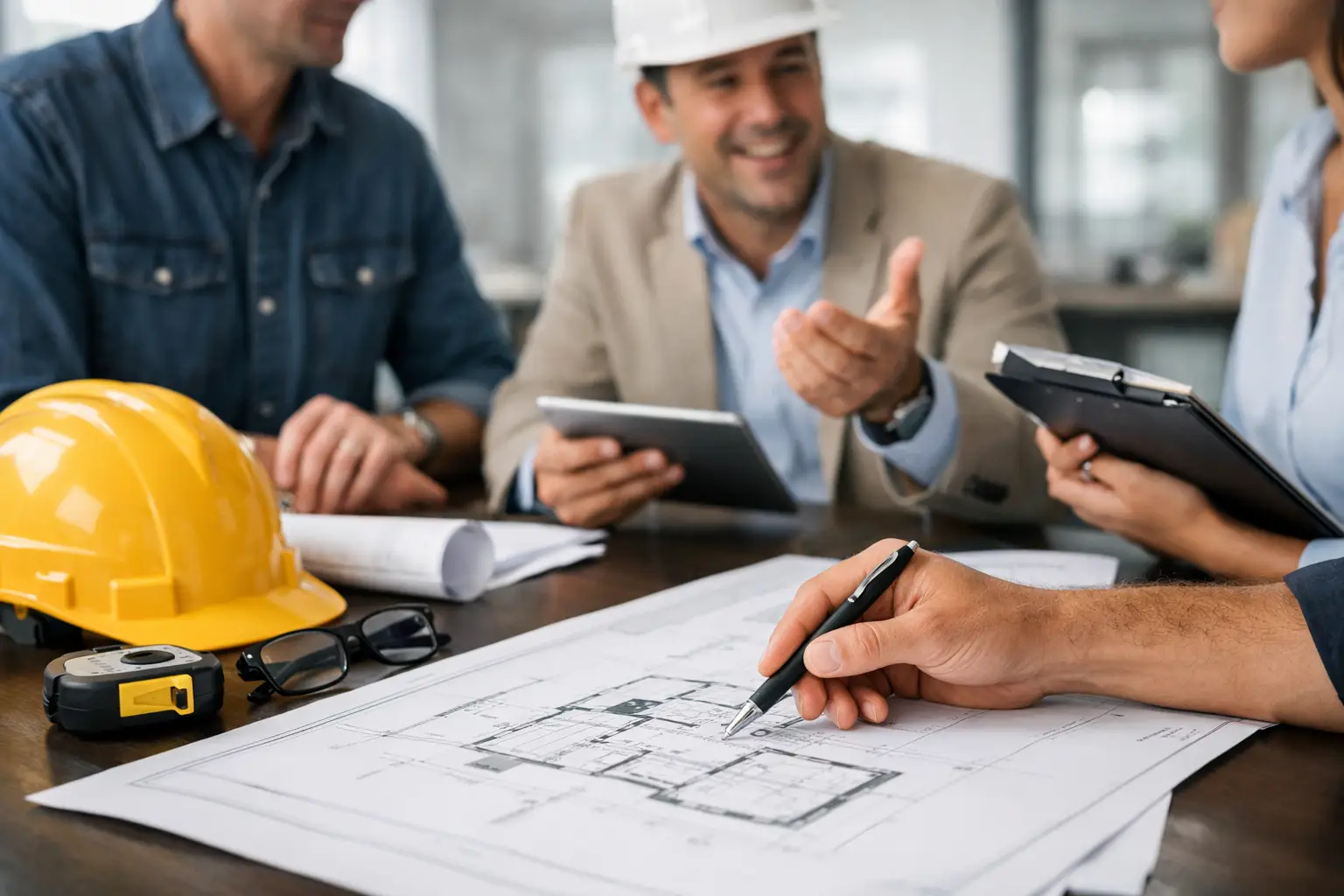
If a contractor interview feels polished but vague, that is usually your first warning sign. The right design-build partner should be able to answer hard questions clearly, with specifics about process, pricing, schedule control, and who is truly accountable when your project gets complicated. These design build contractor review questions are meant to help homeowners sort through marketing language and get to the real issue: who can actually deliver a well-run project and stand behind the work.
For high-value remodels, additions, ADUs, and custom homes, the stakes are too high to rely on general impressions. A beautiful portfolio matters, but it is not enough. What protects your budget, your timeline, and your home is the contractor's operating model.
Why design build contractor review questions matter
In residential construction, the gap between a good presentation and a good project can be wide. Some firms sell the convenience of a single team, but still hand key decisions across a loose network of outside consultants and rotating subs. Others truly coordinate design, preconstruction, permitting, and construction under one accountable process.
That distinction matters most when plans evolve, site conditions change, or city comments force revisions. On the Peninsula, where approvals can be slow and homes often come with structural, access, or neighborhood constraints, the value of a disciplined design-build approach is not theoretical. It shows up in cleaner scoping, faster decisions, and fewer surprises during construction.
The best review questions do more than confirm whether a company offers design-build services. They reveal how that service works when the project gets real.
The design build contractor review questions worth asking
1. Who is responsible for the project from concept through completion?
This sounds basic, but it gets to the core of accountability. Ask whether one team manages feasibility, budgeting, design coordination, permitting, construction, and closeout, or whether those phases shift between separate parties.
You want to understand who owns the handoff points. If the estimator disappears after contract signing, or the design lead is no longer involved once permits are submitted, small disconnects can turn into expensive field decisions.
2. How do you develop scope before pricing?
A contractor who prices too early may simply be pricing assumptions. Ask how they define scope, what level of plan development they need before giving numbers, and how allowances are handled.
There is always some gray area in early budgeting, especially on remodels where existing conditions are not fully visible. Honest contractors will say so. What matters is whether they have a disciplined method for reducing unknowns before construction starts.
3. What is included in your preconstruction process?
This is one of the most important design build contractor review questions because preconstruction is where good projects are protected. Ask what happens before demolition or groundbreaking. That should include budgeting, constructability review, schedule planning, permit coordination, and specification alignment.
If a company treats preconstruction as a quick administrative step, that is a concern. Strong builders use it to identify conflicts early, tighten scope, and make sure the field team is not inheriting preventable problems.
4. Who is actually doing the work?
Many homeowners assume the company they hire is the company building the project. That is not always true. Ask which trades are in-house, which are subcontracted, and how the contractor vets and manages those outside partners.
There is no single correct model for every company. Some subcontracted trades are highly specialized and appropriate. But when a builder keeps key trades and core supervision tightly controlled, quality and schedule discipline are usually stronger. It also makes accountability cleaner when something needs attention.
5. How do you handle change orders?
Every experienced homeowner should ask this directly. Changes happen for different reasons. Some come from owner selections. Some come from plan revisions. Some come from concealed conditions that no one could fully confirm before work began.
What you are looking for is not a promise of zero change orders. That promise is rarely credible. You want a clear explanation of how changes are identified, priced, approved, and documented before extra work proceeds. Transparent change-order communication is one of the clearest signs that a contractor respects both your budget and your decision-making role.
6. How do you keep the schedule on track?
Ask how the schedule is built, how often it is updated, and who is responsible for pushing it forward. A serious contractor should be able to explain sequencing, lead-time management, inspection coordination, and how selections are tracked so materials arrive when needed.
Schedule control is not just about speed. It is about reducing idle time, avoiding stacked delays, and protecting the quality of installation. Fast and disorganized is not a premium service.
7. What happens when the city, engineer, or architect requires revisions?
This is where design-build coordination earns its value. On Peninsula projects, revisions are common. Planning feedback, structural requirements, energy compliance, and utility issues can all reshape scope.
Ask who manages those conversations and how the cost or schedule impact is communicated. If the answer is vague, the project may end up with too many parties pointing at one another. A well-run team should be able to explain exactly how revisions are tracked and resolved.
8. How do you communicate during construction?
A premium project should not leave you guessing. Ask whether you will receive weekly updates, who your day-to-day contact is, and how decisions are documented.
Communication style matters almost as much as communication frequency. Homeowners do not need nonstop noise. They need concise, accurate information about progress, upcoming decisions, budget changes, and anything that could affect occupancy or timing.
9. Can you walk me through a project similar to mine?
General experience is helpful, but relevant experience is better. A kitchen remodel in an occupied home is very different from a detached ADU, and both differ from a whole-house renovation with structural work.
Ask the contractor to explain how they approached a comparable project, where the pressure points were, and what they did to keep the work under control. Listen for details. Specifics are hard to fake.
10. What protections do you put in writing?
A polished verbal promise means very little if the contract is thin. Ask about scope documentation, allowance language, change-order procedures, payment schedules, warranty terms, and what is required before substantial completion.
The goal is not to create an adversarial relationship. It is to make sure expectations are clear enough that both sides can work confidently. The strongest builders are usually comfortable with precision because they already operate that way.
11. How do you approach quality control and punch work?
Quality is not just craftsmanship at the end. It is process throughout the build. Ask how work is inspected internally, who signs off on critical phases, and how punch items are handled before final completion.
This is another place where operating discipline matters. A contractor who relies only on municipal inspections is not showing you a full quality-control system. City inspections set a baseline. High-end residential work should exceed that baseline.
12. What kind of relationship do you expect after completion?
The real test of a builder often comes after move-in. Ask how warranty requests are handled, who responds, and whether the company remains available for follow-up needs.
For homeowners investing in a long-term property, post-completion support matters. The right builder is not trying to disappear at the finish line. They are building a reputation that lasts longer than the project itself.
How to evaluate the answers
Do not just compare answers by confidence. Compare them by clarity. A contractor who speaks plainly about unknowns, trade-offs, and process controls is usually more reliable than one who promises a frictionless experience.
Look for consistency across the conversation. If a company claims strong project management but cannot explain who manages selections, submittals, or permit revisions, the process may not be as integrated as advertised. If they emphasize craftsmanship but outsource nearly every field function, ask how quality is monitored day to day.
It also helps to notice where a contractor is willing to say, "it depends." That is not weakness. In residential construction, good judgment often sounds more measured than sales-driven. The key is whether the explanation stays specific and actionable.
What sophisticated homeowners should listen for
The best firms do not sell certainty where certainty does not exist. They sell control. That means an honest scope, disciplined preconstruction, accountable supervision, and a process that catches issues early instead of charging for confusion later.
For homeowners in markets like Palo Alto, Atherton, Los Altos, and Hillsborough, this matters even more. Complex properties, demanding municipalities, and high expectations leave little room for casual management. A builder needs to be organized enough to protect the investment and experienced enough to protect the experience.
That is why the strongest interviews often feel less like a pitch and more like a working session. The contractor should help you understand the real shape of the project, including the difficult parts. At Westward Construction, that kind of conversation is where trust starts - not with broad promises, but with one accountable team, clear scope, and work built right the first time.
The right question is not whether a contractor sounds impressive. It is whether their answers give you confidence that your home will be handled with the care, structure, and follow-through it deserves.