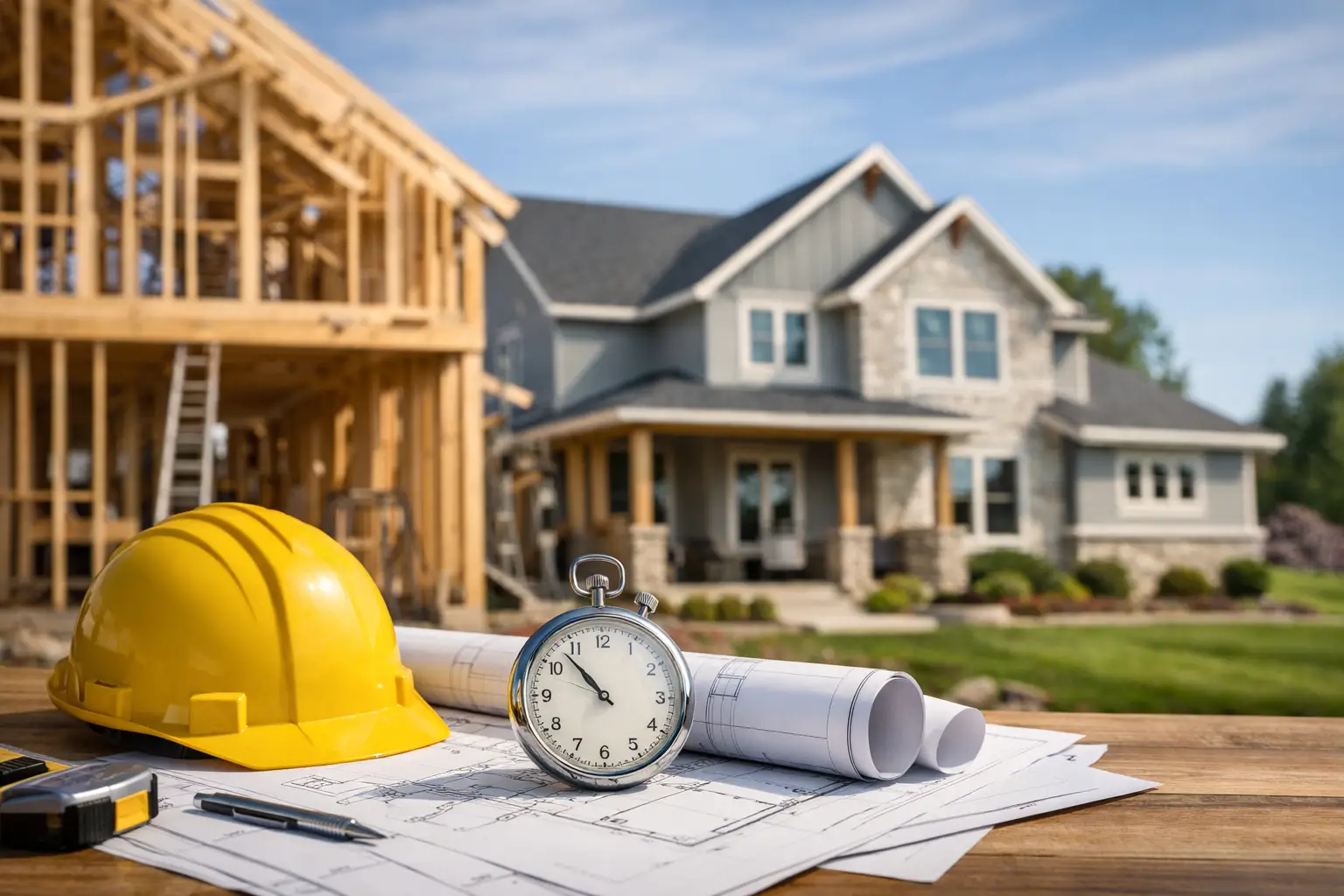
If you are asking how long does it take to build a custom house, you are usually not looking for a one-line answer. You are trying to plan a move, line up financing, make decisions about design, and understand how much uncertainty comes with building from the ground up. The honest answer is that a true custom home often takes 14 to 24 months from early planning to final completion, and on the San Francisco Peninsula, local approvals, site constraints, and finish expectations can push that range higher.
That range is wide for a reason. A 3,500-square-foot home on a straightforward lot with a decisive owner and a well-coordinated team moves very differently than a hillside property in Woodside, a tight infill lot in Palo Alto, or a highly detailed residence with extensive steel, large-span glazing, and imported finishes. The timeline is not just about construction. It is about design maturity, permit strategy, engineering, selections, inspections, and how well the team controls handoffs from one phase to the next.
How long does it take to build a custom house from start to finish?
For most high-end custom homes, it helps to think in phases rather than a single deadline. Pre-construction, which includes feasibility, design development, engineering coordination, budgeting, and permit preparation, often takes 4 to 10 months. Permitting can add 3 to 9 months, sometimes more depending on the city, planning review, utility requirements, and whether the project triggers hearings or revisions. Construction itself commonly runs 10 to 16 months for a fully custom home, with another few weeks at the end for punch list, inspections, and move-in readiness.
Put together, a realistic planning window is often 14 to 24 months. Some projects land below that. Many do not. Homeowners are often surprised that permit and pre-construction time can rival the build itself, especially in cities where review cycles are slow or the project has architectural complexity.
The phases that shape the schedule
Pre-construction sets the pace
The earliest phase is where strong projects gain time later. Site analysis, zoning review, survey work, geotechnical reports, architectural planning, structural engineering, and early budget alignment all happen here. If these pieces are rushed, the schedule usually pays for it later through redesign, permit comments, or construction changes.
This is also the stage where finish level starts to matter. A home with standard windows, straightforward rooflines, and conventional mechanical systems is easier to document and price than a home with custom steel doors, radiant heat, integrated smart systems, and specialty stone details. Custom work is not slow because anyone is working casually. It takes longer because the number of decisions is larger and the tolerance for mistakes is smaller.
Permits can be predictable or not
On the Peninsula, permitting is often the least controllable part of the timeline. One jurisdiction may move cleanly through plan check, while another may issue multiple rounds of corrections or require outside agency review. Fire, public works, planning, utilities, school districts, and tree protections can all affect timing depending on the property.
This is where homeowners benefit from a builder who is involved early. Plans that are beautiful but not coordinated for code, constructability, or scope clarity can spend months in revision. A disciplined design-build coordination process does not remove every delay, but it does reduce preventable ones.
Construction starts with groundwork, not finishes
Once permits are issued, the visible progress still tends to come in waves. Site prep, demolition if needed, excavation, grading, foundation work, underground utilities, and retaining structures can absorb significant time before the framing even begins. On a flat lot, this may move efficiently. On a sloped site or one with access limitations, it can take much longer.
After that, framing, roofing, windows, rough MEPs, insulation, drywall, millwork, tile, flooring, paint, fixtures, and final trim unfold in sequence. The critical point is that custom homes are layered systems. A delay in one category often affects three others. If window lead times slip, exterior dry-in may slip. If dry-in slips, interior finishes can drift. That is why schedule discipline matters as much as craftsmanship.
What usually delays a custom home?
Homeowners often assume weather is the main culprit. Sometimes it is, but in premium residential work, delays are just as likely to come from decision-making, procurement, and scope movement.
Late selections are a common issue. If cabinetry, plumbing fixtures, appliances, flooring, and finish materials are not chosen on time, the field team may have to pause, resequence, or install temporary solutions. The more custom the product, the longer the lead time tends to be.
Changes during construction also have a real schedule cost. Some changes are worth making. Others are reactions to incomplete planning. Moving walls, revising lighting layouts, altering structural features, or changing a finish package after procurement has started can add weeks, not days.
Site conditions are another variable. Poor soils, hidden utilities, drainage problems, easement conflicts, and older infrastructure connections can all create work that was not visible at the beginning. On older Peninsula properties, surprises below grade are not unusual.
Then there is coordination. A custom home does not stay on track just because talented trades are involved. It stays on track because there is one accountable team managing sequencing, long-lead purchasing, inspections, and quality control at the same time.
Why high-end homes take longer than many homeowners expect
A luxury custom home is not simply a larger version of a production build. It has more detail, more customization, more owner input, and less repetition. That changes the timeline.
For example, a home with flush base details, specialty plaster, concealed steel, custom oak paneling, oversized sliders, and integrated mechanical systems requires tighter field coordination than a conventional spec home. Nothing is standard, so fewer problems can be solved by default. Every detail has to be interpreted, built, reviewed, and often refined in real time.
There is also a quality question. A disciplined builder does not compress every phase just to hit an optimistic date. Concrete needs proper cure time. Waterproofing must be done carefully. Cabinetry and trim installation need stable conditions. Final finishes cannot be rushed without risking the result. Built right the first time is usually faster than repairing rushed work later.
How to keep the timeline realistic and controlled
The best way to shorten a custom home schedule is not to demand speed at every step. It is to reduce friction before friction becomes expensive.
Start with a complete scope. The more decisions that are made before permits and procurement, the smoother construction tends to go. Engage the builder early enough to budget in real time and flag plan issues before they become field problems. Approve selections on schedule, especially windows, doors, cabinetry, appliances, and specialty finishes. Be thoughtful about changes once construction begins. And make sure there is a clear communication rhythm, whether that means weekly updates, decision logs, or schedule reviews.
This is one reason many homeowners prefer a single contractor who can coordinate closely across pre-construction and field execution. When the team pricing the work is also responsible for building it, schedule assumptions tend to be more honest. At Westward Construction, that level of accountability is reinforced by in-house trades in key scopes, which helps tighten coordination and reduce the common delays that come from relying on a constantly rotating trade base.
A realistic timeline by project type
If you want a working rule of thumb, a smaller and less complex custom home may take around 12 to 18 months from design kickoff to completion. A mid-size high-end home with standard city review and a fully custom finish package often lands around 16 to 22 months. A large or architecturally ambitious home with hillside work, extensive glazing, complicated approvals, or specialized materials can stretch to 24 months or more.
That does not mean the longer project is poorly run. Sometimes a longer schedule reflects a better-built home, a more complex jurisdiction, or a more exacting design. The right question is not just how fast can it be done. It is whether the schedule matches the scope, the site, and the quality level you expect.
The answer homeowners actually need
So, how long does it take to build a custom house? Long enough that you should plan carefully, but not so long that uncertainty has to rule the process. With the right team, honest scoping, early coordination, and disciplined communication, the timeline becomes something you can manage rather than something you simply endure.
A custom home should take time where time protects quality, and move efficiently where planning and accountability can remove avoidable delays. That is usually the difference between a stressful build and a well-run one you are still proud of years after move-in.