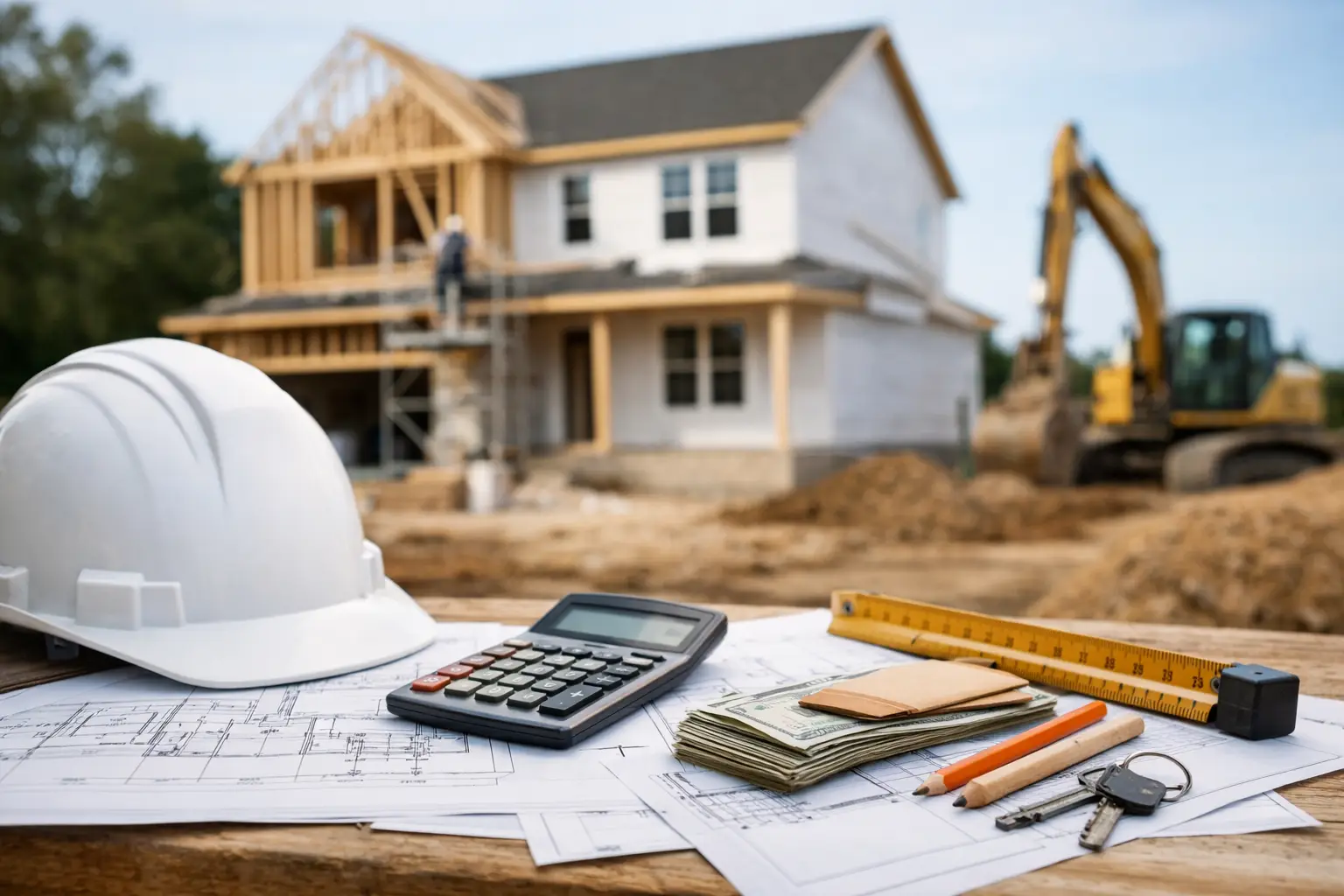
Sticker shock usually starts when two neighbors compare numbers for “the same size house” and realize the budgets are nowhere close. With new custom home construction costs, square footage matters, but it is only one piece of the picture. On the San Francisco Peninsula, the bigger drivers are complexity, site conditions, finish level, permitting requirements, and how tightly the project is scoped before construction begins.
For homeowners in places like Hillsborough, Atherton, Palo Alto, Los Altos, and Burlingame, the cost conversation needs to be more precise than a national average. A custom home here is not a commodity. It is a fully coordinated process involving architecture, engineering, planning, demolition if needed, utilities, structural requirements, energy compliance, finish selections, and a builder who can keep quality and schedule under control.
What drives new custom home construction costs
The first cost driver is the house itself - size, layout, structural spans, ceiling heights, window packages, and the amount of detailing in the design. A straightforward two-story home with efficient geometry generally costs less per square foot than a highly articulated design with extensive steel, large openings, complicated rooflines, and specialty exterior finishes.
The second driver is the site. Flat, accessible lots are more predictable. Sloped sites, narrow access, poor soil, protected trees, high water tables, and utility upgrades create a very different budget. On the Peninsula, site work can move the needle quickly, especially when excavation, retaining, drainage, or deep foundation solutions are involved.
The third driver is finish level. This is where many early budgets drift off course. Custom cabinetry, premium appliances, steel or wood-clad windows, imported tile, integrated lighting, and high-end plumbing fixtures can add meaningful cost without changing the square footage at all. Two homes of equal size can land in very different budget ranges based on selections alone.
A realistic cost range for the Peninsula
If you are planning a ground-up custom home in San Mateo or Santa Clara County, broad pricing ranges are more useful than oversimplified averages. In this market, new custom home construction costs often start around the high hundreds per square foot for a well-built custom home and can climb well beyond that for premium architecture, complex engineering, luxury finishes, and challenging site conditions.
That range is intentionally broad because honest budgeting depends on real drawings, real specifications, and real site data. A home designed for clean execution with disciplined material choices will price differently than a home that prioritizes one-of-a-kind detailing at every turn. Neither is wrong. They are simply different projects with different cost structures.
Homeowners sometimes ask whether building new is more cost-effective than a major whole-house remodel. The answer depends on the property. If the existing home has substantial structural limitations, outdated systems, poor layout efficiency, or local constraints that make phased renovation cumbersome, new construction can be the cleaner long-term investment. But if the lot already supports a strong structure and the scope is targeted, remodeling may preserve value. This is why feasibility work matters early.
Where the money actually goes
Construction cost is not one line item. It is a stack of interdependent decisions. The visible finishes get most of the attention, but the unseen systems and early-stage work often determine whether a project stays stable.
Pre-construction and design
Before the first yard of concrete is poured, there are costs tied to surveys, soils reports, architectural design, structural engineering, civil engineering when needed, energy compliance, and permit coordination. This stage is where smart projects protect themselves. The more clarity developed here, the fewer surprises later.
Site work and foundations
Clearing, demolition, grading, trenching, drainage, retaining walls, shoring, utility connections, and foundation work can represent a significant share of the budget. On some lots, this phase is routine. On others, it becomes a major cost center because the site itself is doing the negotiating.
Framing, envelope, and roofing
This is the shell that determines durability and performance. Framing complexity, shear requirements, waterproofing details, roofing systems, insulation strategy, and window installation quality all affect cost. They also affect whether the house holds up the way it should ten or twenty years from now.
Mechanical, electrical, and plumbing
Modern custom homes are system-heavy. Panel capacity, backup power readiness, HVAC zoning, radiant heat, ventilation, smart home integration, and plumbing distribution all shape the budget. This is one area where builder oversight matters. When critical trades are tightly coordinated, mistakes are caught earlier and schedules tend to move with less friction.
Interior finishes and millwork
Cabinetry, flooring, tile, countertops, doors, trim, hardware, lighting, paint, and built-ins are often where personal taste pushes the project upward. These are not cosmetic afterthoughts. They are central to how the house feels and functions every day.
Why early allowances can be misleading
A low initial budget can look attractive until allowances start getting tested. If appliance, tile, lighting, or plumbing fixture allowances are set below the level the homeowner actually expects, the project will appear affordable on paper and then expand through change orders.
That does not mean allowances should be avoided entirely. It means they should be honest. A disciplined builder will pressure-test assumptions early and say plainly when the target budget does not match the desired outcome. That conversation is far more useful before permit submission than halfway through framing.
The biggest variables homeowners underestimate
Permits and approvals are one. Peninsula jurisdictions are detail-oriented, and review timelines can shape both soft costs and project pacing. Delays do not always show up as a direct line item, but they affect the overall carrying cost of the project.
Utility work is another. New service requirements, panel upgrades, sewer lateral work, water service changes, and coordination with local providers can add cost and time. These items are easy to overlook in casual budgeting because they sit outside the more visible parts of the house.
Then there is exterior scope. Driveways, gates, hardscape, landscape lighting, drainage improvements, fencing, pools, accessory structures, and site walls are frequently budgeted too late. A finished custom home rarely feels finished without these elements, yet they are often excluded from early conversations.
How to budget new custom home construction costs more accurately
The best budgeting process starts with alignment, not guesswork. Begin with the lot, the program, and the standard of finish you actually want. If the goal is a long-term family home with architectural character and high-performance systems, the budget needs to reflect that from the beginning.
Next, invest in pre-construction. Detailed scope development, constructability input, and line-by-line budgeting reduce expensive ambiguity. This is where a full-service builder adds real value. When the contractor is involved early, pricing reflects how the home will actually be built, not just how it looks on a plan set.
It also helps to carry a real contingency. Even well-run projects need room for hidden conditions, jurisdictional comments, utility adjustments, or owner-driven upgrades. The right contingency depends on how complete the documents are and how complicated the site is, but pretending it is unnecessary is usually where preventable stress begins.
At Westward Construction, this is why transparent scoping and accountable execution matter so much. A premium home deserves more than a loosely assembled estimate. It deserves one contract you can hold accountable, with clear communication when something changes.
Cost control does not mean cutting the wrong corners
There are smart ways to control cost without cheapening the house. Simplifying the structural grid, reducing unnecessary roof complexity, standardizing window sizes where appropriate, and selecting materials with strong durability-to-cost value can protect the budget while preserving quality.
The wrong kind of savings usually appears later as maintenance, warranty frustration, or visible wear. Cutting waterproofing details, underbuilding systems, or choosing installers based only on price tends to cost more over the life of the home. For most Peninsula homeowners, that trade-off is not worth it. They are building for comfort, resale strength, and peace of mind, not just for a move-in date.
What a strong builder should give you
When evaluating bids, look beyond the bottom number. Ask how complete the scope is, what assumptions are built in, which trades are directly managed, how change orders are handled, and how frequently you will receive updates. The quality of the budget process is often a preview of the quality of the build.
A strong contractor should be able to explain not just what the house costs, but why. That includes clarifying where design choices are pushing pricing, where the site introduces risk, and where strategic decisions can preserve value. In high-end residential construction, clarity is part of the product.
If you are planning a custom home, the goal is not to chase the lowest figure. It is to build a budget that reflects the house you actually want, on the lot you actually own, with a team that can carry it through permits, construction, and final completion without losing control of the details. Built right the first time is not a slogan. It is usually the most cost-aware decision you can make.